

The short answer
- A vague spec, not bad cleaning, is what wrecks most office contracts.
- Access hours and key handling move the price more than floor area does.
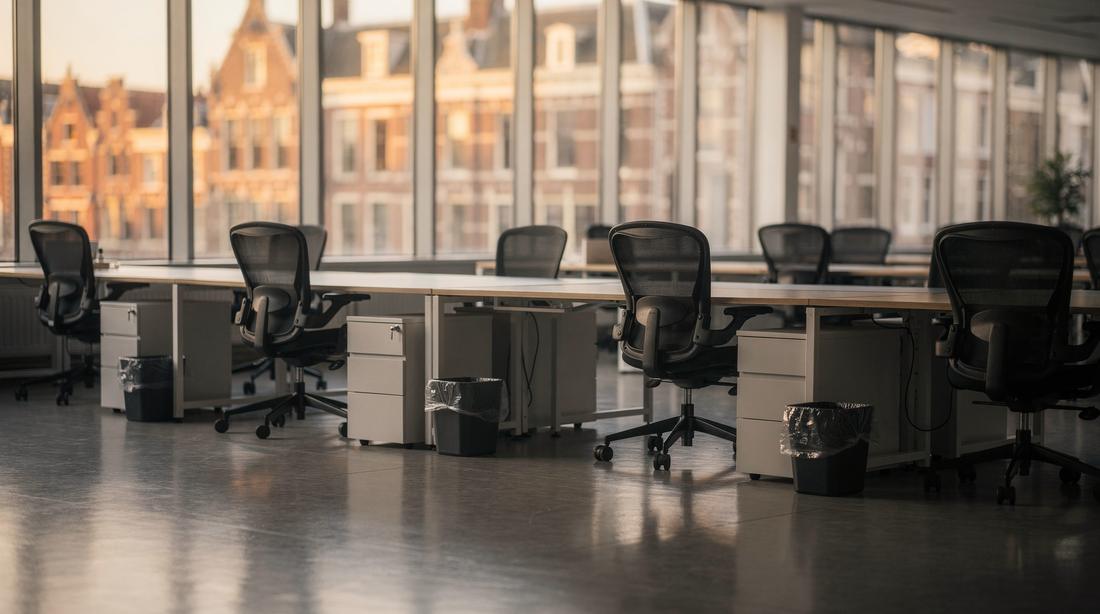
- Desks are only cleanable with a clear-desk policy — otherwise they get cleaned around.
- Washrooms and consumables are where contracts quietly fail. Specify who restocks.
- Ask what is periodic rather than daily. That list is where surprises live.
What’s in this guide
Most unhappy office cleaning contracts are not the result of bad cleaning. They are the result of a vague specification, agreed quickly, that never said who empties the dishwasher or how often the glass gets done. Six months later the office is quietly annoyed and the contractor is quietly confused, and both parties are right. This is what a specification should actually contain, what genuinely drives the price, and the questions worth asking before you sign anything.
What a specification should actually contain
Not "general office cleaning". A usable spec answers, room type by room type, three questions: what gets done, how often, and by whom.
| Area | Should be specified |
|---|---|
| Desks and workstations | Surfaces only, or surfaces plus phones and keyboards? Clear-desk policy in force? |
| Floors | Vacuum daily, mop how often, machine-scrub how often? |
| Washrooms | Clean and restock? Who supplies consumables? |
| Kitchen | Surfaces only, or dishwasher, fridge and coffee machine too? |
| Glass and partitions | Spot-clean at hand height daily, full clean how often? |
| Bins | Emptied to where? Who takes waste to the street, and on which days? |
| Meeting rooms | Reset between uses, or cleaned once at end of day? |
| Reception | First impression — usually needs a higher standard than the rest |
If a quote does not distinguish between these, it is not a quote — it is a number attached to an assumption.
Daily, three times a week, or weekly
Frequency should follow headcount and use, not budget instinct:
- Daily — client-facing space, shared washrooms with real traffic, food prepared or eaten at desks, or more than roughly fifteen people in.
- Three times a week — the most common sensible answer for a small-to-mid office with hybrid attendance. Ties cleaning to the days people are actually in.
- Weekly — small teams, mostly remote, low-traffic washroom. Workable, provided someone internally handles bins and the kitchen on other days.
★ Match the days, not the count
With hybrid working, three cleans on the wrong days is worse than two on the right ones. If the office is full Tuesday to Thursday, clean Tuesday, Wednesday and Thursday evenings — not Monday and Friday because they were free in the schedule.
Access is the real cost driver
People expect floor area to dominate the quote. It rarely does. What actually moves the number:
- When we can get in. Before opening, after closing, or during the day. Out-of-hours work is planned differently and priced differently.
- Key and alarm handling. Whether a key is held, whether an alarm code is issued, whether someone must be present. Each one adds coordination.
- Whether one team can cover it on a fixed round. A site that fits a route costs less than one that needs a special trip.
- Waste. Where bins go, who takes them to the street, and on which collection days.
- Sector requirements. A childcare setting or a commercial kitchen carries obligations a normal office does not.
This is why office work is quoted per site rather than from a rate card, and why a per-m² figure from someone who has not seen the building tells you very little. There is more on that in what cleaning costs in Maastricht.
Washrooms and consumables
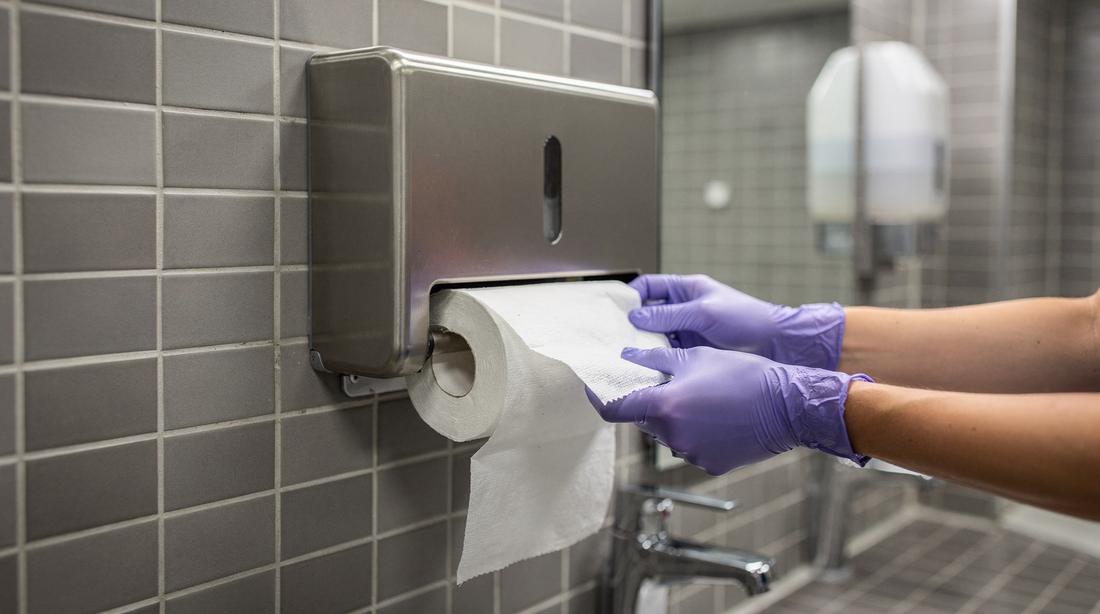
This is where contracts quietly fail, and always for the same reason: nobody wrote down who buys the toilet paper.
- Who supplies consumables — paper, soap, bin liners, sanitary units. Contractor or client?
- Who monitors stock levels, and what happens when something runs out mid-week.
- Sanitary waste disposal, which is a separate regulated service and is often assumed rather than agreed.
- Frequency of the deeper items — descaling, grout, extractor grilles — which are not daily tasks.
An office washroom is also the space staff judge the whole contract on. It is worth over-specifying.
The office kitchen problem
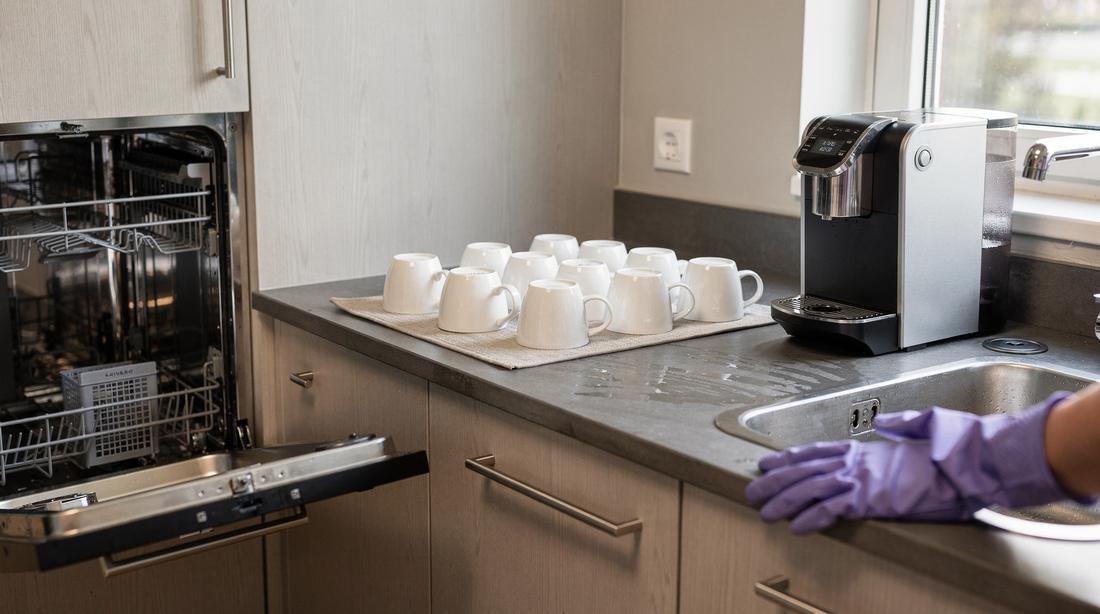
The kitchen generates more internal complaints than any other part of an office, and most of them are not really cleaning issues — they are ownership issues. Be explicit about:
- The dishwasher. Emptied by the cleaner, or by staff? If nobody owns it, it silently becomes a cupboard.
- The fridge. When is it cleared out, and who is allowed to throw food away? Pick a day and publish it.
- The coffee machine. Descaling is a scheduled task, not a wipe.
- Personal items. Cleaners cannot bin someone's lunchbox. Someone internal has to.
What is not in a daily round
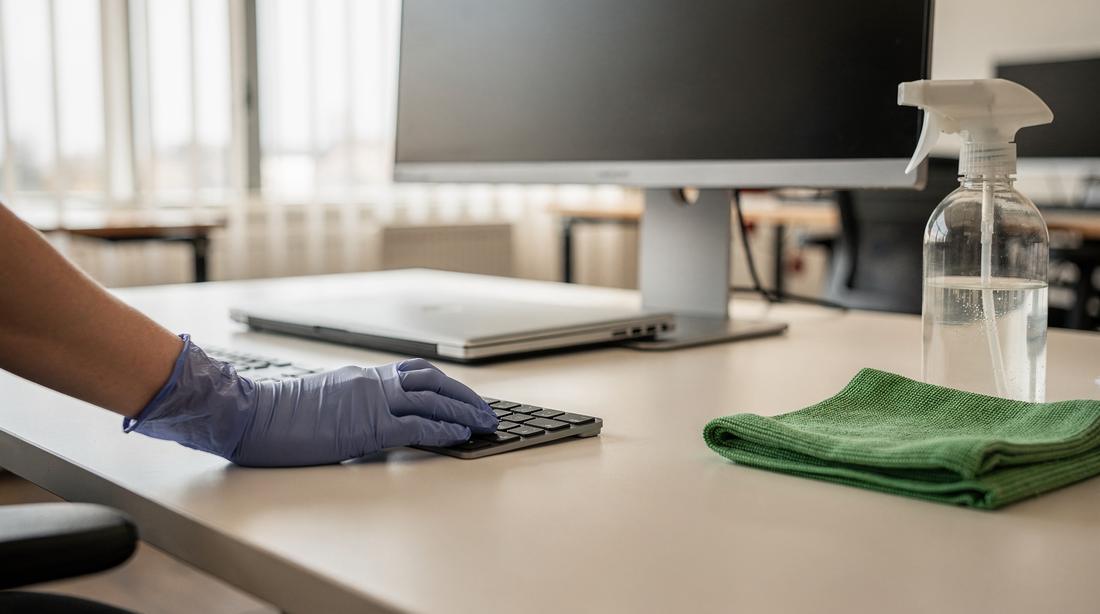
A daily or thrice-weekly round covers surfaces, floors, washrooms, kitchen and bins. It does not cover the following, and these should be scheduled separately with a stated frequency:
| Task | Typical frequency |
|---|---|
| Interior glass and partitions, full clean | Monthly |
| Exterior windows | Quarterly |
| Carpet extraction | Every 12–18 months |
| Hard-floor machine scrub | Quarterly to twice yearly |
| Upholstered chairs | Annually |
| High-level dusting, light fittings, vents | Quarterly |
| Inside kitchen appliances | Quarterly |
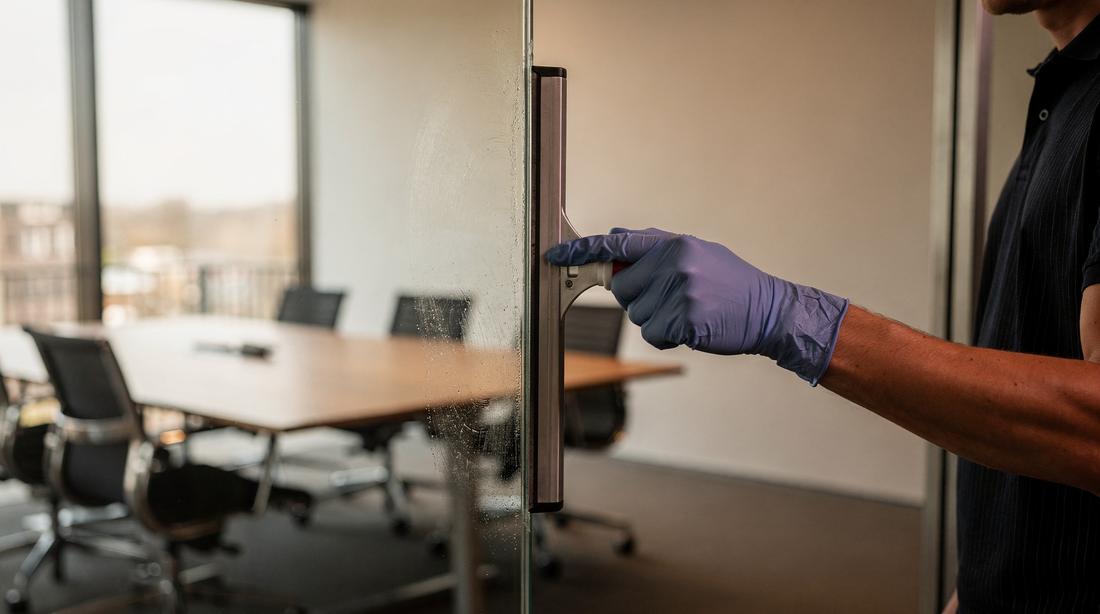
Glass is the one most often left out, and the most visible: partitions and door glass at hand height show every fingerprint, in a way a floor never does.
Reading an office cleaning quote
✓ Five questions worth asking
- Is this per visit or per month, and including VAT?
- What is on the periodic list, and at what frequency?
- Who supplies and monitors consumables?
- Are you insured and KvK-registered? (Ours is KvK 86396862, fully insured.)
- How will I know the work was done on a night when nobody was there?
That last question is the one most contractors answer badly. Ours: every visit is confirmed on site with an NFC check-in, and every finished area is photographed and reviewed before the job is called done — so an office manager arriving at 08:30 can check the record rather than the room.
€ How it is priced
Business cleaning is quoted per site, because access, frequency and sector requirements dominate the cost. Tell us the building, the hours and the days you need covered and you get a fixed all-in figure including VAT. See business cleaning or request a quote.
Frequently asked questions
How often should an office be cleaned?
Daily for client-facing space, shared washrooms with real traffic, or more than roughly fifteen people on site. Three times a week suits most small-to-mid hybrid offices. Weekly works for small, mostly-remote teams provided someone internal handles bins and the kitchen in between. With hybrid working, match the days people are actually in rather than spreading cleans evenly.
What should be in an office cleaning specification?
Room type by room type: what gets done, how often, and by whom. In particular, be explicit about desks and whether a clear-desk policy applies, who restocks washroom consumables, whether the dishwasher and fridge are the cleaner's job, how often glass and partitions get a full clean, and who takes waste to the street on collection days.
Why is office cleaning not priced per square metre?
Because floor area is not the main cost driver. Access hours, key and alarm handling, whether a team can cover the site on a fixed round, waste arrangements and sector requirements all move the figure more than another fifty square metres of carpet. That is why business work is quoted per site rather than from a rate card.
Do cleaners clean desks with items on them?
They clean around them. A cleaner cannot move your papers, laptop or personal items without risking losing or damaging something, so a desk covered in documents gets its visible edges wiped and nothing else. If you want desks genuinely cleaned, you need a clear-desk policy on cleaning days — otherwise you are paying for a task that cannot be performed.
How do I know the cleaning was actually done overnight?
Ask how it is documented, because this is the question most contracts answer badly. Every visit of ours is confirmed on site with an NFC check-in, and every finished area is photographed and reviewed before the job is called done. An office manager arriving in the morning can check the record instead of inspecting the room.