




The short answer
- Work top to bottom, back to front — dust falls, so ceilings and shelves come before floors.
- Declutter first, clean second. Cleaning around objects costs roughly double the time.
- Budget one room per half-day, not a whole house per weekend.
- Hard Limburg water means limescale will return — descale, then dry the surface to slow it down.
- Ovens, mattresses, upholstery and carpets are the jobs where a machine beats effort.
What’s in this guide
Spring cleaning fails for one of two reasons: either you try to do the whole house in a weekend and give up on Sunday afternoon, or you clean around your things instead of moving them. This checklist fixes both. It runs room by room in the order that stops you making work for yourself, tells you roughly how long each room takes, and is honest about the four or five jobs that are genuinely better handed to someone with the right machine.
Work in this order, and the house cleans itself faster
Almost every wasted hour in a spring clean comes from sequencing. Three rules cover it:
- Top to bottom. Light fittings, the tops of wardrobes, shelves, then surfaces, then skirting boards, then floors. Dust falls. If you vacuum first you will be vacuuming again.
- Back to front. Start at the wall furthest from the door and work towards it, so you are never walking back across what you have just finished.
- Dry before wet. Vacuum or sweep before anything damp touches the floor. Wet dust turns into a smear that takes three passes to lift.
Then declutter before you clean, not while you clean. Clearing a surface and wiping it in one pass is quick; picking up, wiping under, and putting back thirty individual objects is not. If a room is genuinely cluttered, treat tidying as its own separate session the evening before.
★ Set a timer
Twenty focused minutes per job, then move on. Spring cleaning collapses when a single kitchen cupboard turns into a two-hour archaeology project. Anything you find that needs a decision goes in a box to deal with later.
Kitchen — start here while you still have energy
The kitchen holds the most built-up grease of any room, and it is the room where the difference is most visible. Do it first.
- Empty the fridge and freezer completely, defrost the freezer, and wash every drawer and shelf. Check dates as you go.
- Degrease the oven and microwave inside. Apply the cleaner, then leave it to work — most of the effort people spend scrubbing is effort the product should have done.
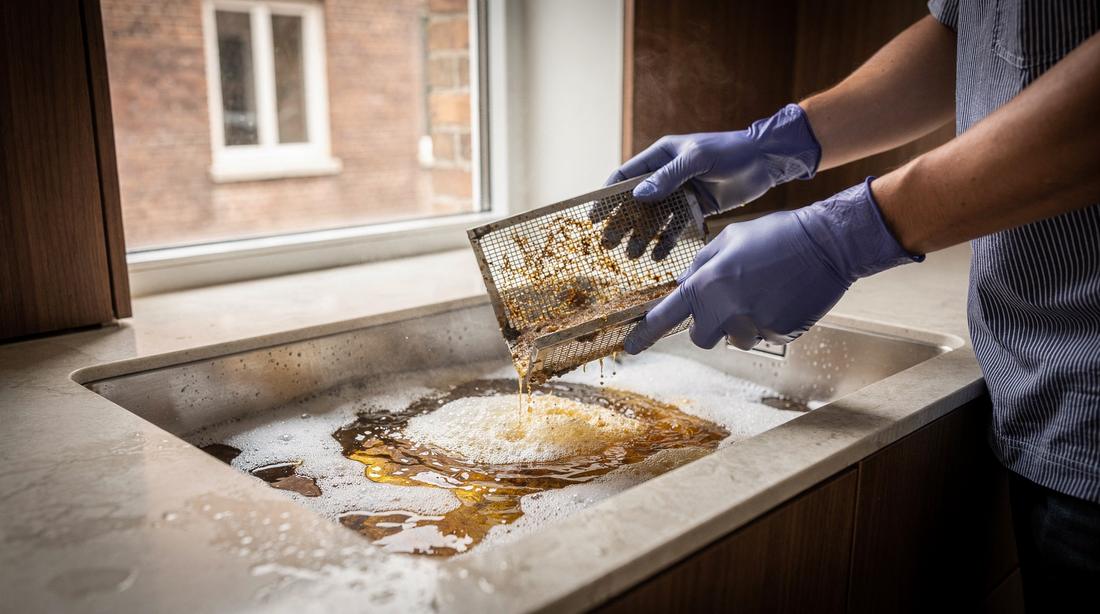
- Wash or replace the extractor-hood filters. A saturated filter stops pulling grease out of the air and starts putting it on your cupboard doors.
- Empty each cupboard, wipe it out, and wipe the doors — including the top edge, where a greasy film collects unseen.
- Descale the kettle and coffee machine, and flush the sink drain with soda crystals and hot water.
- Do the tiles and the wall behind the hob last. This is where grease hides in plain sight.
✓ The test that shows you it worked
Clean one cupboard door and leave the one beside it. The difference is usually startling — and it is the most reliable way to see that a thin grease film was there at all.
Bathroom — two enemies, limescale and damp
Limburg water is hard. That is a fact about the supply, not a reflection on your cleaning, and it means limescale returns no matter how well you work. What you can control is how quickly.
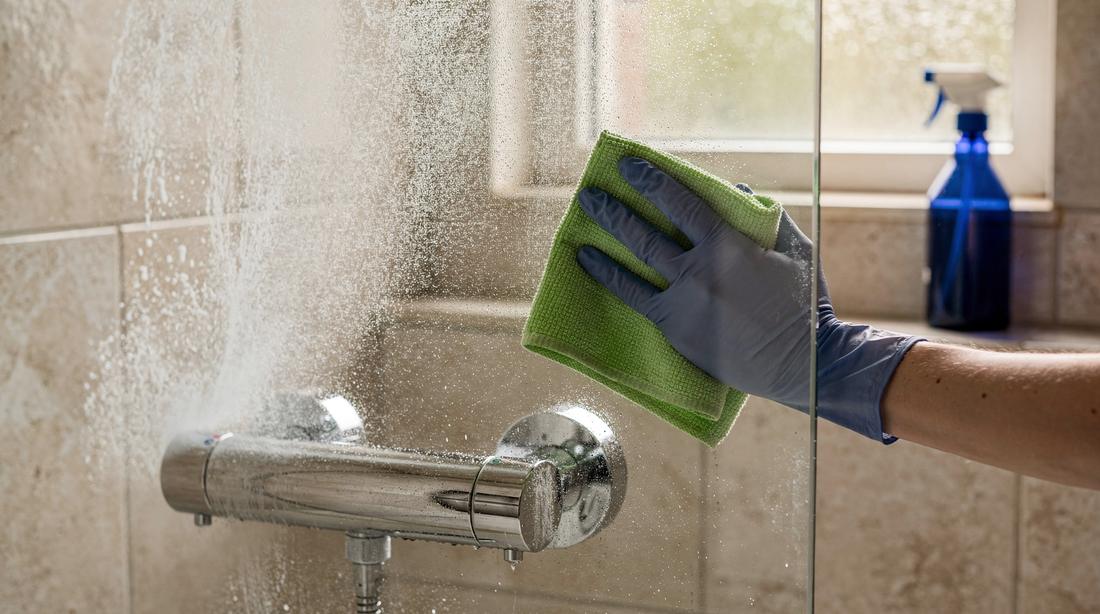
- Descale taps, the shower head and the shower screen. Vinegar or citric acid handles most of it; stubborn scale needs a second application rather than more force.
- Check grout and silicone edges for mould and treat spots immediately — mould spreads from a foothold.
- Clear the drain and the shower trap.
- Wash shower curtains and bath mats at the highest temperature the label allows.
- Dust the ventilation grille. A blocked extractor is the single most common cause of recurring bathroom mould.
ℹ Why it comes back so fast
Scale forms as water evaporates and leaves its minerals behind. So the habit that actually slows it down is drying the glass and taps after use — a squeegee by the shower does more over a month than a stronger cleaner does in one go.
Bedrooms and living room — the bits you normally skip
In living spaces, spring cleaning is mostly about the places routine cleaning never reaches: above eye level, under furniture, and inside textiles.
- Turn and air mattresses; wash or professionally clean duvets and pillows.
- Wipe the tops of wardrobes and vacuum under beds and sofas — move them, do not reach.
- Wash or steam the curtains, and vacuum the sofa including under the cushions.
- Clean radiators, skirting boards, door frames and lampshades.
- Treat stains in carpets and rugs, or have them properly extracted.
The jobs that make a house feel genuinely reset are almost never the visible ones. They are the tops of things, the undersides of things, and the textiles.
Windows and frames — the biggest visible difference
Nothing changes the feel of a room in spring like clear glass, and nothing shows up a rushed job faster than low spring sun.
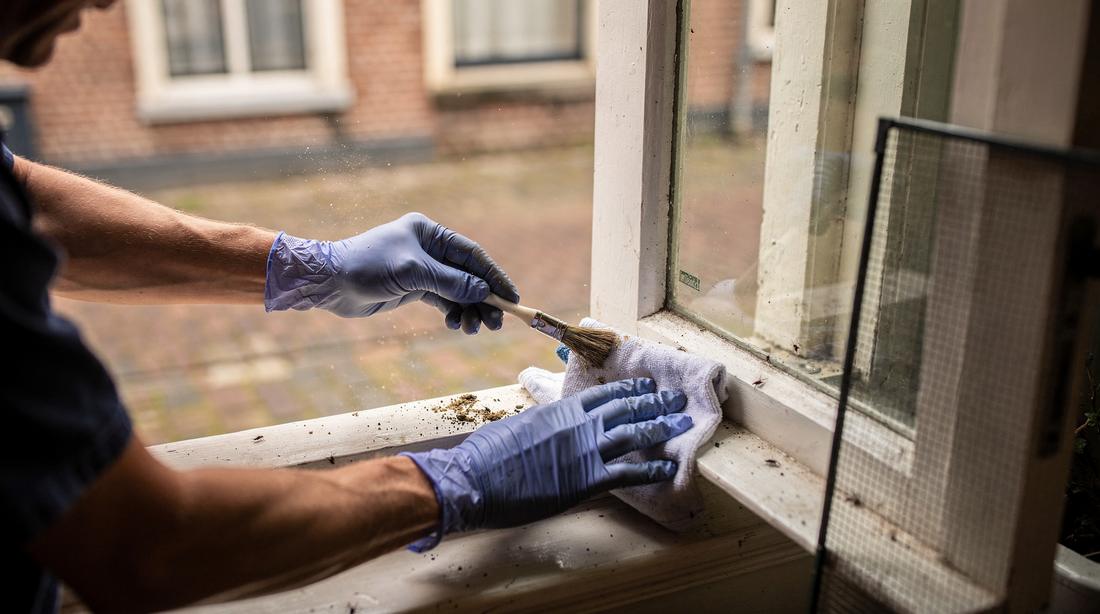
- Wash inside and out, ideally on an overcast day. In direct sun the water dries before you can squeegee it off, and that is what leaves streaks.
- Do the frames, sills and any insect screens at the same time.
- Check the silicone edges and the ventilation grilles around the frames while you are there.
⚠ Know where to stop
Ground-floor glass is a reasonable DIY job. Anything that needs a ladder, reaching over a extension roof, or leaning out of an upstairs window is not — that is what a glass cleaner with poles and the right insurance is for.
Soft furnishings — where a machine beats effort
A sofa, a mattress and a wool rug all hold a winter's worth of dust, skin and pollen deep in the fibre. A vacuum takes the top layer. Hot-water extraction takes the rest out of the pile instead of redistributing it.
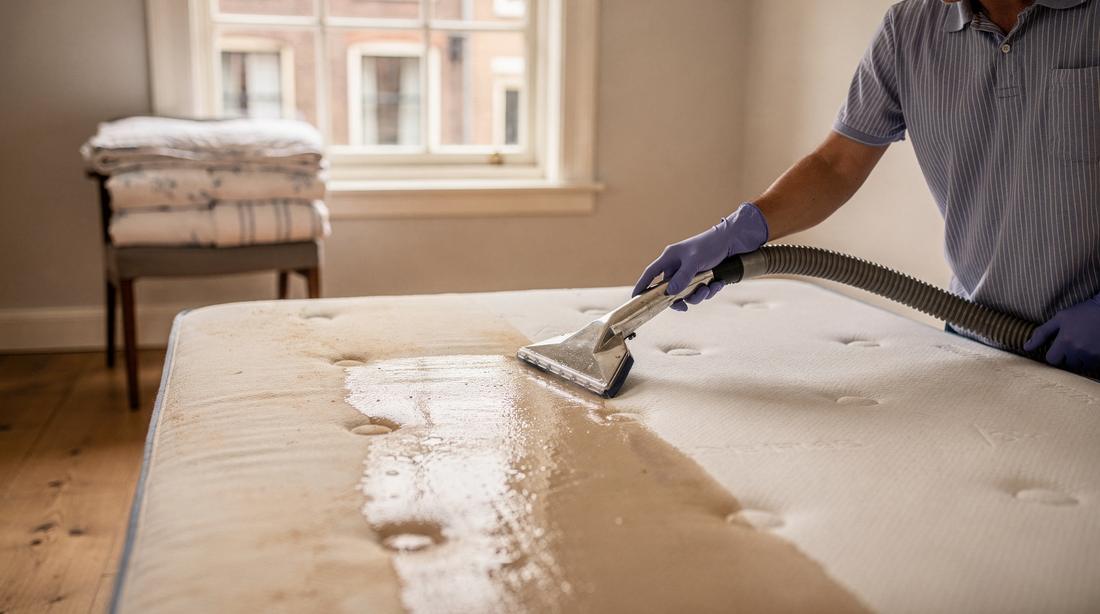
This is the clearest example of the whole checklist's underlying point: some jobs reward effort, and some jobs reward equipment. Scrubbing a mattress by hand for an hour achieves less than ten minutes with an extractor.
Hall, stairs, storage and outside
- Beat or replace the doormat — the hall catches most of the street dirt in the house.
- Vacuum the stairs and wipe the handrail and spindles.
- Clear the storage room or attic, and give away what you no longer use.
- Replace smoke-alarm batteries while you have the ladder out. Small moment, large difference.
- Sweep the balcony or terrace and remove green algae from the tiles.
- Wipe down garden furniture and check cushions for damp and mould.
- Clean the front door, letterbox and outside lights — this is the first impression of your home.
- Check that gutters and downpipes are clear of leaves.
How long it really takes
The single most useful thing to know before you start is that a whole-house spring clean is not a weekend job. Realistic figures for an average Maastricht home, working steadily:
| Room | Realistic time | The job that eats it |
|---|---|---|
| Kitchen | 3–4 hours | Oven, cupboard interiors, extractor filters |
| Bathroom | 2–3 hours | Descaling, grout, ventilation |
| Bedroom (each) | 1.5–2 hours | Mattress, wardrobe tops, under the bed |
| Living room | 2–3 hours | Upholstery, curtains, skirting boards |
| Windows (whole house) | 2–4 hours | Frames and sills, not the glass |
| Hall, stairs, storage | 1.5–2 hours | Decluttering decisions |
That totals somewhere between 14 and 20 hours for a three-bedroom home. Spread over four half-days it is very manageable. Attempted in one weekend it is why most spring cleans stop halfway through the second day.
When it is worth handing over
Some jobs need more than household products and patience: grease that has baked on over years, limescale that keeps returning, mattresses and sofas that need real extraction, or simply a home that has not had a proper reset in a long time. A professional deep clean covers all of it in one visit — including the insides of appliances, skirting boards, doors and reachable windows.
€ How a deep clean is priced
A deep clean starts from €260 incl. VAT, and you get a fixed all-in price from our manager after a short visit — the €76.30 onboarding, once on a first booking and part of your total price. We cannot price your home blind: the work depends on its state, not its floor area. So the manager sees it first, your fixed price comes in writing the same day, and anything extra you ask for is agreed and paid before your cleaning day. Get your exact price.
If you want to hold the result afterwards, a regular plan is what keeps the deep clean from being an annual emergency. Plans are priced per visit, from the checklist our manager makes for your home at the onboarding — see the plans and pick the rhythm that fits your household: weekly, bi-weekly or monthly. That is how the spring feeling lasts past May.
Frequently asked questions
How long does a full spring clean take?
For an average three-bedroom home, 14 to 20 hours of actual work. The kitchen alone is 3 to 4 hours because of the oven, cupboard interiors and extractor filters. Plan one room per half-day rather than attempting the house in a single weekend — that is the most common reason spring cleans get abandoned halfway.
What order should I clean a room in?
Top to bottom, back to front, dry before wet. Light fittings and the tops of cupboards first, then surfaces, then skirting boards, then the floor. Start at the wall furthest from the door. And always vacuum before anything damp touches the floor, because wet dust smears.
Why does limescale keep coming back in my bathroom?
Because the water in Limburg is hard. Scale forms whenever water evaporates and leaves its minerals behind, so it is a property of the supply rather than a cleaning failure. Descaling removes it; drying the glass and taps after use is what slows its return. A squeegee kept in the shower is more effective over a month than a stronger cleaner used once.
Should I clean the windows or the frames first?
Frames, sills and screens first, then the glass. Dirt and grit from the frames will run onto clean glass if you do it the other way round. Pick an overcast day — in direct sunlight the water dries before you can pull it off, which is exactly what causes streaks.
Which spring cleaning jobs are worth paying someone for?
The ones where equipment beats effort: oven interiors, mattresses, upholstery, carpets and rugs, and any window that needs a ladder. Hot-water extraction pulls dust out of a sofa or mattress rather than moving it around, which is not something a household vacuum can do. Everything else is genuinely doable yourself with this checklist.