

The short answer
- Vacuuming takes the top layer; extraction removes what is in the pile. Different tools, different jobs.
- The machine's recovery tank is the proof — you can see what came out.
- Pre-treatment does the real work. Extraction only removes what has been loosened first.
- Bleach, sun-fade, dye transfer and old pet urine are often permanent. Say so up front.
- Expect 4–8 hours drying for carpet with airflow, longer for a thick wool rug.
What’s in this guide
A vacuum cleaner is a surface tool. It lifts what is sitting on top of the pile and a little of what has worked just below it, and that is genuinely all it is designed to do. Everything further down — the grit that grinds at the fibres, the skin and dust mites in a mattress, the body oils in a sofa cushion, the spill that dried and set — stays exactly where it is, however long you spend. That gap is what this article is about: what is actually down there, what hot-water extraction removes, what nothing removes, and how long you will be waiting for it to dry.
Vacuuming and extraction are not the same job
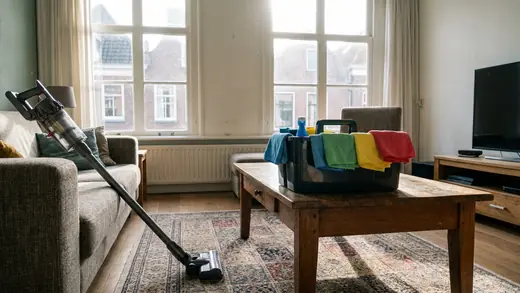
A domestic vacuum pulls air across the surface of a textile. That collects loose material sitting on and just under the tip of the pile. It cannot flush anything, it cannot dissolve anything, and it has no way of lifting material that has bonded to a fibre.
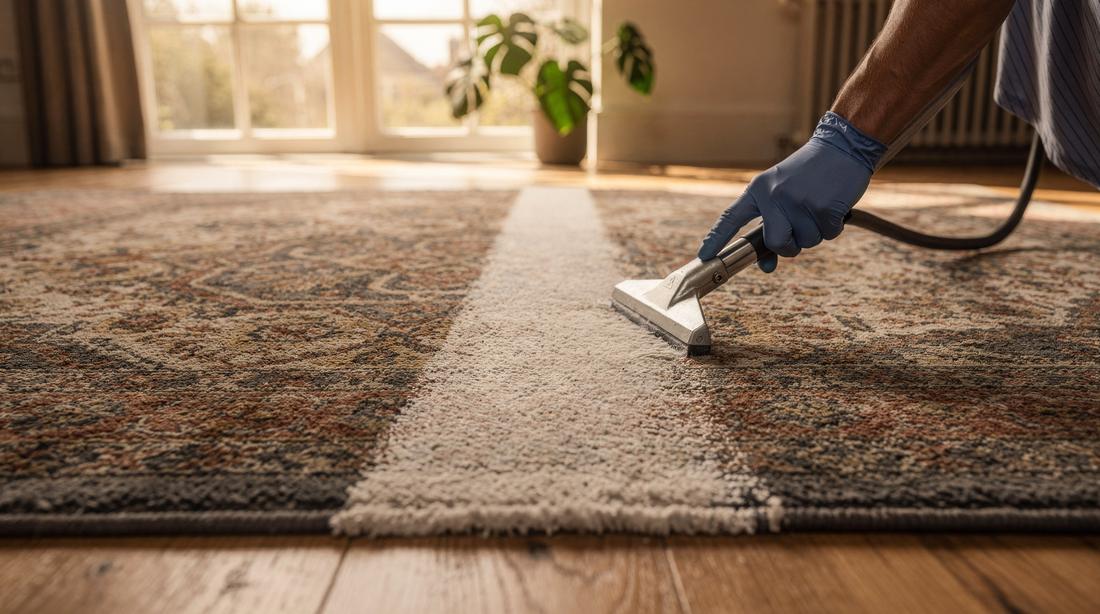
Hot-water extraction does something structurally different: it injects heated solution into the pile under pressure, which loosens and suspends the soil, and then immediately vacuums that solution back out along with whatever it picked up. The soil leaves the building in a tank rather than being redistributed.
✓ The test you can watch
Ask to see the recovery tank at the end. If the water comes out grey-brown and gritty, that material was in your carpet an hour ago. If it comes out nearly clear, the textile genuinely was clean and you have just been told something useful.
What is actually in your carpet, sofa and mattress
- Grit and sand. The important one, and the least obvious. Mineral grit is abrasive, so every footstep grinds it against the fibres like fine sandpaper. This is wear, and it is why extraction is maintenance rather than vanity.
- Skin cells and dust mites. Mattresses and sofas are the main habitat. Surface cleaning does not reach them.
- Body oils and sweat. These transfer into upholstery at head and arm height and slowly darken it — the reason a sofa looks tired before it looks dirty.
- Pet dander and hair worked deep into the pile, well below vacuum reach.
- Old spills. Sugars and proteins that dried, set, and now attract fresh soil to the same spot, which is why an old stain often looks like a dark patch rather than a mark.
How a proper clean actually runs
- Inspect and test. Fibre type identified, a colour-fastness test in an out-of-sight corner. Wool, viscose and some synthetics all behave differently, and viscose in particular can be damaged by water.
- Dry vacuum first. Thorough, before any moisture. Wetting loose grit turns it into mud.
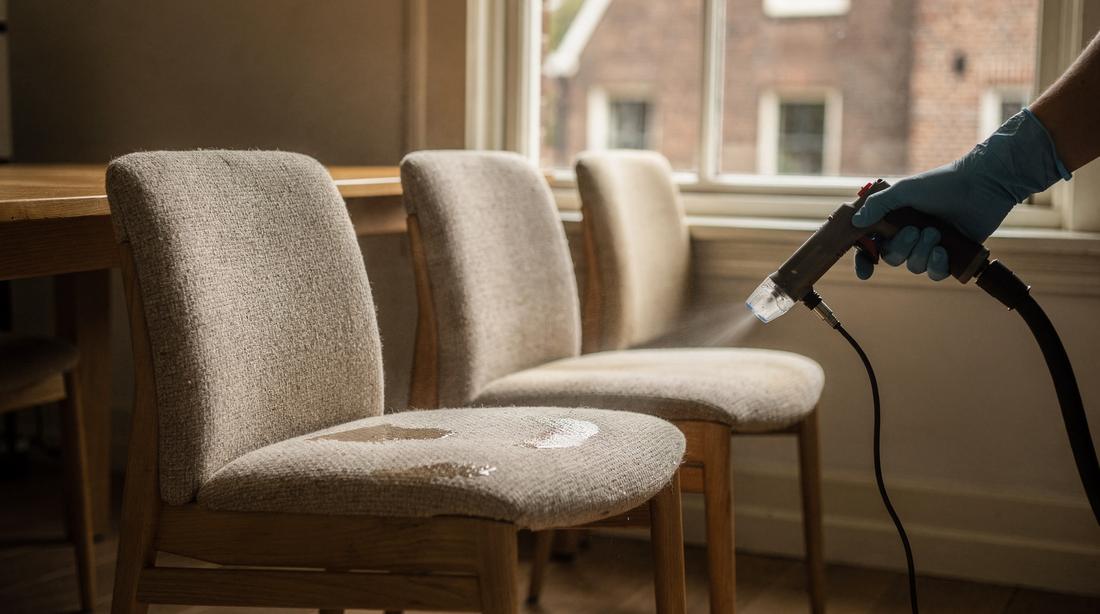
- Pre-treat. Solution applied and given dwell time. This is where the cleaning happens.
- Agitate. Brushed through the pile so the solution reaches the base of the fibre.
- Extract. Overlapping passes, then dry passes with no solution to pull out as much moisture as possible.
- Groom and dry. Pile set in one direction, airflow on.
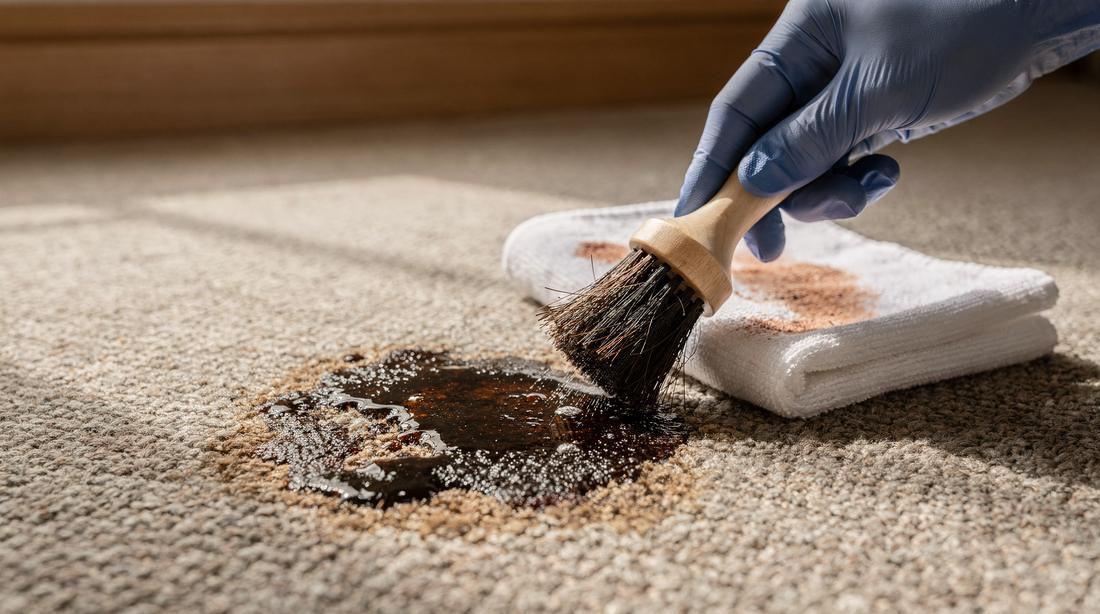
Steps 3 and 4 are the ones cheap jobs skip, because they take time and do not look like progress. Skipping them turns extraction into an expensive way of making a carpet wet.
Stains, and what will not come out
The honest part. A stain is not always dirt — sometimes the fibre itself has changed colour, and no cleaning process reverses that.
| Usually comes out | Often permanent |
|---|---|
| Coffee, tea, wine, juice | Bleach and strong cleaning products |
| Food, grease, cooking oil | Sun-fading along a window line |
| Mud and general traffic soil | Dye transfer from a rug or newspaper |
| Fresh pet accidents | Old pet urine that has reached the backing |
| Body oils in upholstery | Burns, melted fibre, cuts |
⚠ Two things that make stains permanent
Scrubbing, which drives the spill deeper and fluffs the fibre so it never looks the same; and heat, which sets protein and sugar stains. Blot, do not rub. Cold water, not hot. And resist the urge to empty a supermarket stain remover onto it — several of those bleach wool.
Mattresses and sofas are the bigger win
Carpet is what people book. Mattresses and sofas are usually where the difference is more noticeable, because they are used at close range and nobody has ever cleaned inside them.
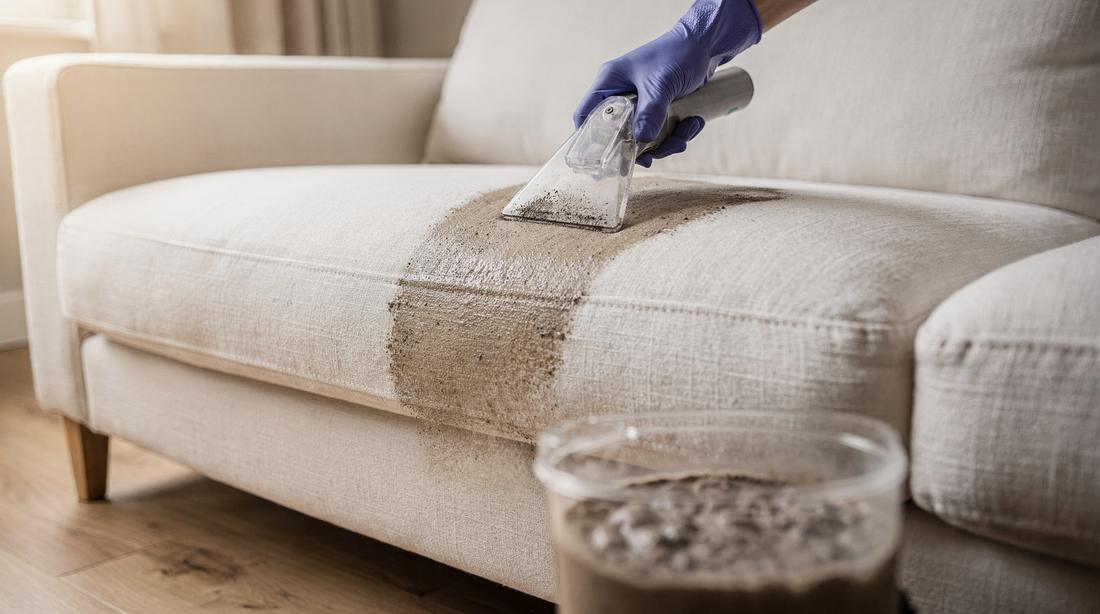
A mattress holds years of skin and moisture; a sofa cushion holds the same plus whatever has been eaten on it. Both are far too dense for a vacuum to affect, and both respond well to a proper extraction. If anyone in the house has a dust allergy, these two items matter more than the floor — see the point about indoor dust in the hidden benefits of a professionally cleaned home.
Drying time, honestly
This is where cheap quotes mislead. Extraction leaves textiles damp, and how long they stay damp depends on how much moisture was left in them:
| Item | With good airflow | Without |
|---|---|---|
| Fitted carpet, short pile | 4–6 hours | 12+ hours |
| Thick wool rug | 8–12 hours | 24+ hours |
| Sofa cushions | 4–8 hours | 12+ hours |
| Mattress | 6–8 hours | Do not attempt without airflow |
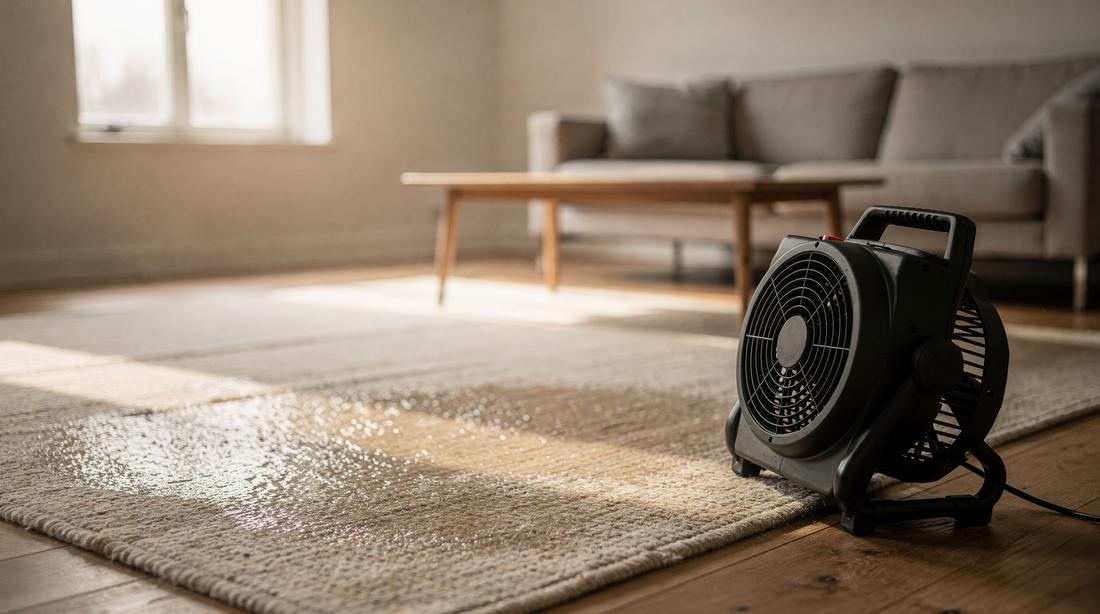
Airflow is not optional. A textile left damp in a closed room develops a musty smell within a day, which is worse than the problem you started with. Open windows, run fans, and do not put a mattress back into service until it is dry to the touch at depth.
How often
- Living-room carpet and rugs: every 12–18 months; annually with pets or children.
- Sofas: every 12–24 months, sooner if it is the main seat in the house.
- Mattresses: every 12 months, or every 6 with an allergy in the household.
- Fabric dining chairs: annually — they collect far more than people expect.
How it is priced
€ Paid estimate, then a fixed price
Carpet and upholstery work runs on the paid-estimate model, because fibre type, size and the state of the textile decide the job and none of them can be judged over the phone. A photo estimate is €25, deducted in full from your invoice when you book (€38.70 express), and you get a fixed all-in price including VAT, usually within one business day. Order an estimate.
Full details on the carpet, sofa and mattress page. Current rates for everything else are on the price list.
Frequently asked questions
Is professional carpet cleaning really better than vacuuming?
They do different jobs. A vacuum collects what sits on and just under the tip of the pile; it cannot flush or dissolve anything. Hot-water extraction injects solution into the pile, suspends the soil and vacuums it back out, so the material leaves in a tank instead of being redistributed. Ask to see the recovery tank — that is the visible proof of the difference.
How long does carpet take to dry after cleaning?
Four to six hours for a short-pile fitted carpet with good airflow, eight to twelve for a thick wool rug, and considerably longer without ventilation. Airflow is not optional: a textile left damp in a closed room can smell musty within a day. Open windows and run fans until it is dry at depth.
Which stains cannot be removed from carpet?
Anything where the fibre itself has changed colour rather than being dirty: bleach marks, sun-fading along a window line, dye transfer from a rug or newspaper, burns and melted fibre, and old pet urine that has soaked through to the backing. Coffee, wine, food, grease, mud and fresh pet accidents usually do come out.
Should I scrub a spill out myself?
No — blot it, do not rub. Scrubbing drives the spill deeper and fluffs the fibre so the patch never looks the same again. Use cold water rather than hot, because heat sets protein and sugar stains permanently. Be careful with supermarket stain removers too; several of them bleach wool.
How often should a mattress be cleaned?
About every twelve months, or every six if someone in the household has a dust allergy. A mattress accumulates years of skin cells and moisture and is far too dense for a vacuum to affect, which makes it one of the items where professional extraction shows the biggest difference.