

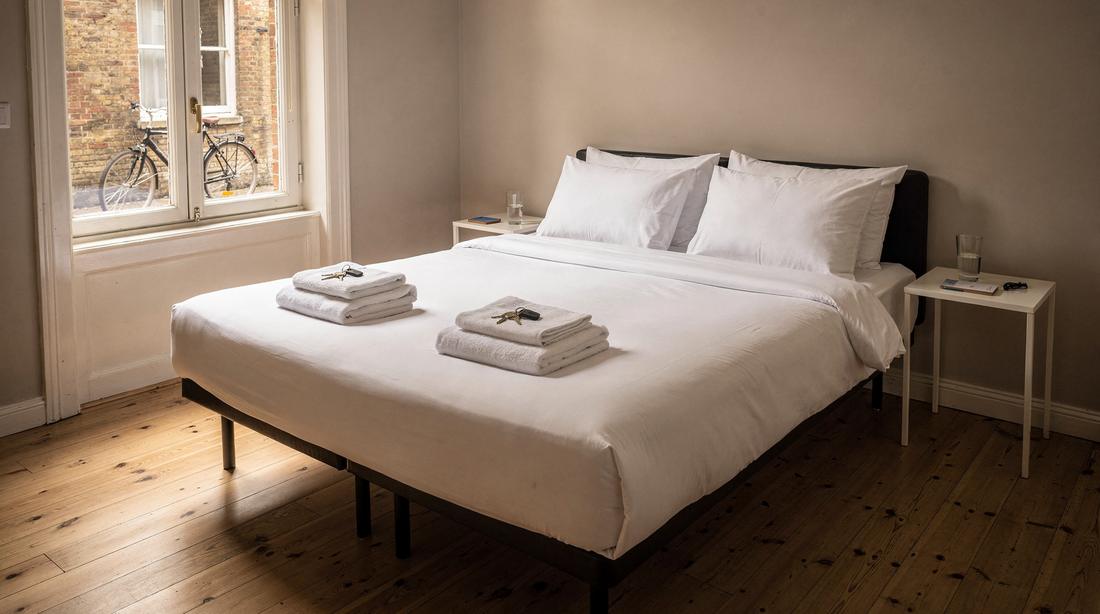
The short answer
- Guest-ready is a higher standard than clean — a guest photographs what a resident forgives.
- The checkout-to-check-in gap is the constraint everything else plans around.
- Strip everything first. Deciding what "looks unused" mid-turnover is how bad reviews happen.
- The bathroom generates more complaints than the rest of the property combined.
- Hold two full linen sets per bed so a turnover never waits on a wash cycle.
What’s in this guide
A short-stay turnover is not a small house clean. It is a reset to a fixed standard, done against a clock, for someone who will photograph anything wrong and publish it. That changes the work in three ways: the standard is higher than a home's, the sequence has to survive a two-hour gap between checkout and check-in, and consumables matter as much as surfaces. A guest forgives a scuffed skirting board. They do not forgive one hair in the shower.
Guest-ready is not the same as clean
In a home, cleaning maintains a standard its occupants already accept. In a short-stay let, cleaning has to reproduce an identical standard for a stranger who has paid for it, has never been there, and is comparing it against photographs.
Practically, that means three things a domestic clean does not:
- Presentation counts. Towels folded the same way every time, linen taut, cushions squared. It is not fussiness — consistency is what stops a listing's reviews drifting.
- Nothing personal may remain. A previous guest's hair, crumb, receipt or forgotten charger reads as "not cleaned", regardless of how clean the room actually is.
- Everything gets checked, not just cleaned. Lightbulbs, remote batteries, the kettle, the shower drain. A cleaner who only cleans will leave you a working room with a dead bulb in it.
The gap is the real constraint
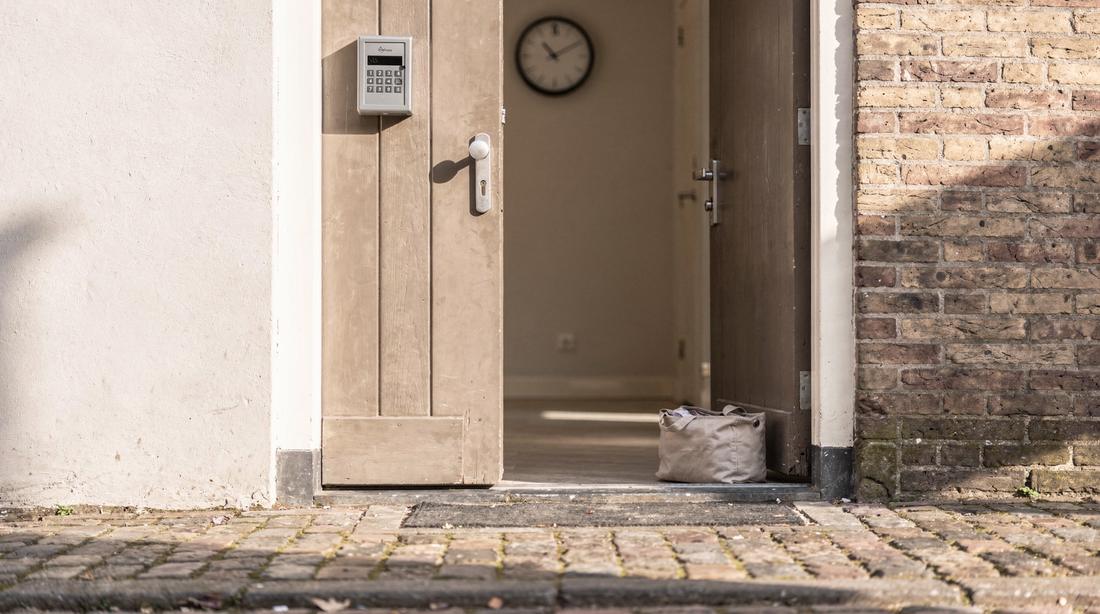
Checkout at 10:00 and check-in at 15:00 gives you five hours. In practice it gives you far less: travel between properties, laundry, and the chance the previous guest leaves late. Everything about turnover design comes back to that window.
★ The two things that buy you the most time
Linen already washed and on site (see the two-set rule below), and a lockbox or smart lock so nobody waits on a key handover. Between them these two remove most of the reason turnovers overrun.
The turnover, in order
- Walk through and check for damage or forgotten items before touching anything. Photograph anything that needs reporting — once you have started cleaning, you cannot prove what state the room was in.
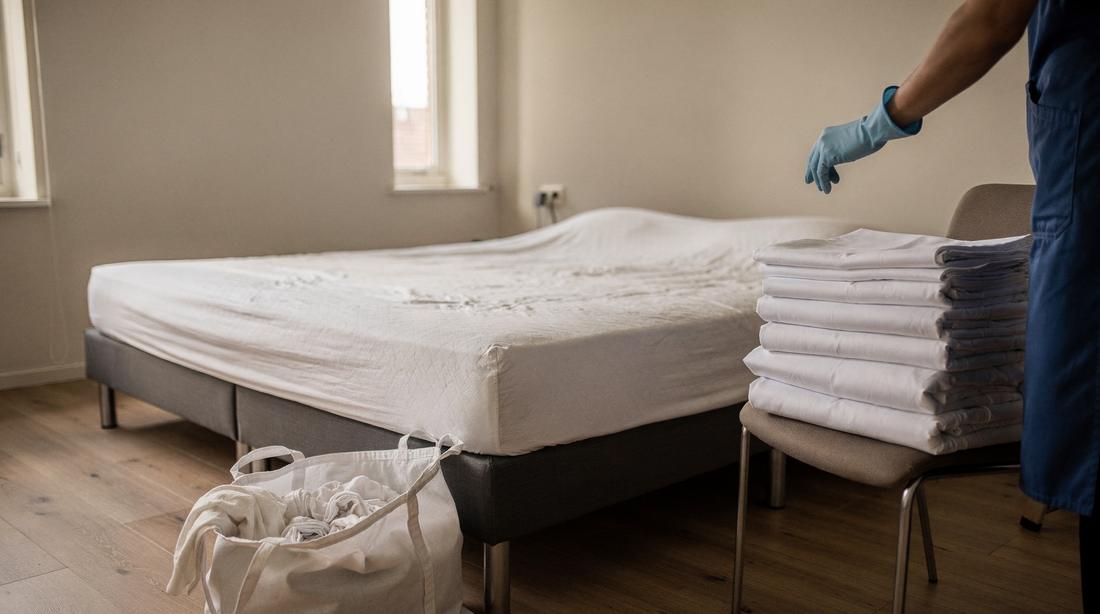
- Strip everything. All bed linen, all towels, bath mat, tea towels. No judgement calls about what looks unused.
- Empty all bins and check for food in the fridge, cupboards and the freezer.
- Kitchen. Dishwasher emptied and restarted if needed, worktops cleared and wiped, hob and splashback degreased, fridge wiped, coffee machine cleaned.
- Bathroom. Its own section below — this is the one that matters.
- Bedrooms. Make up with fresh linen, dust, check under the bed and inside drawers for left items.
- Living areas. Surfaces, glass, cushions, floor. Reset furniture to its photographed position.
- Floors last, whole property, working towards the door.
- Restock and stage consumables, towels, welcome items.
- Final walk-through from the front door, in the guest's eye line, and photograph each finished room.
Step 10 matters more than it sounds. Standing where the guest will stand catches what a cleaner working outward misses — and the photographs are the record if a complaint arrives after check-in.
The bathroom decides your rating
If you improve one room's process, improve this one. It generates more short-stay complaints than everything else combined, and the reason is that bathroom faults are visceral rather than aesthetic.
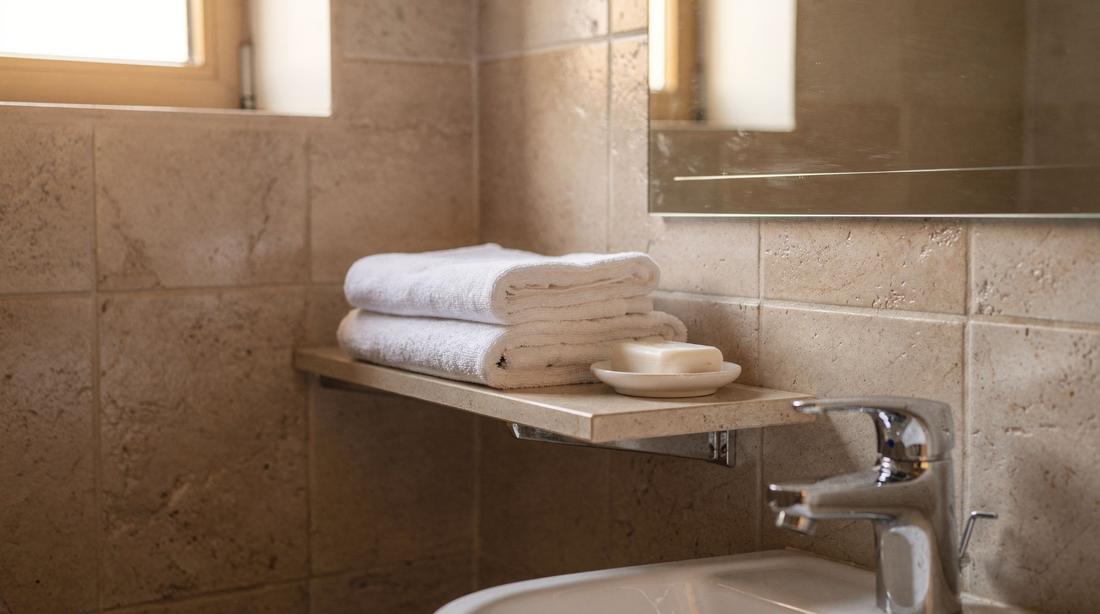
- Hair. The shower floor, the drain cover, the corner where the floor meets the wall, the back of the toilet base. This is the number-one complaint in short-stay reviews, and it is almost always in one of those four places.
- The drain itself. Not just around it. A slow drain during a shower ruins a stay.
- Limescale on the screen and taps. Maastricht water is hard, so this returns constantly and reads as neglect.
- The mirror, dry and streak-free. It is at face height and it is the first thing anyone looks at.
- Grout and silicone checked for the beginnings of mould, especially in a flat that has been let continuously.
- Toilet brush and bin emptied and rinsed, not just straightened.
Linen and the two-set rule
Hold two complete sets per bed and bathroom: one in use, one clean and ready. Three if you have back-to-back bookings most weekends.
The reason is simply arithmetic — with one set, every turnover contains a wash and dry cycle, so the turnover cannot be shorter than the laundry. With two, the wash happens on your schedule instead of the guest's. It is the single highest-leverage change most hosts can make.
✓ Worth doing once
Wash all linen at the same temperature on the same programme, and keep sets together. Mismatched greys from different wash histories are visible in photographs even when everything is technically clean.
Consumables and restocking
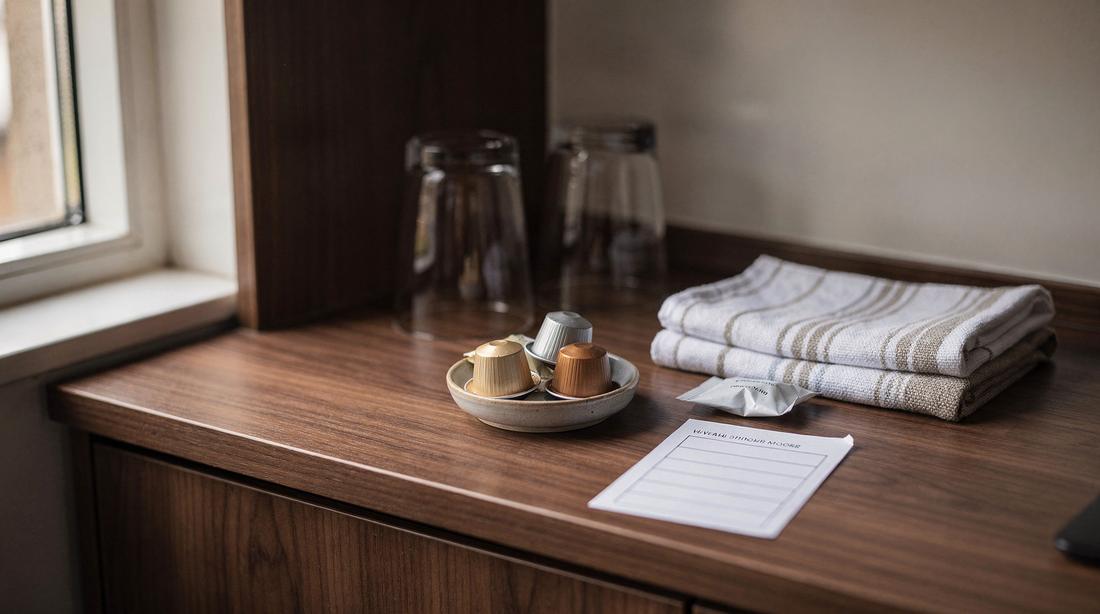
Count these rather than glancing at them, because running out mid-stay produces a message to you at an inconvenient hour:
- Toilet paper — at least two spare rolls, visible.
- Hand soap, shower gel, shampoo.
- Dishwasher tablets, washing-up liquid, sponge, bin liners.
- Coffee, tea, sugar, and whatever your listing promises.
- Tea towels, spare bin liners, a working torch if your listing has one.
If your listing photographs show a welcome tray, that tray has to be there every single time. A promise in a photograph is a promise.
What guests actually complain about
| Complaint | Where it comes from |
|---|---|
| Hair in the bathroom | Shower floor, drain, wall junction, toilet base |
| Smell | Bins, drains, damp towels, closed-up flat in summer |
| Crumbs in drawers or the toaster | Kitchen done at surface level only |
| Dust on high surfaces | Above eye level, never in the routine |
| Previous guest's items | Under the bed, in bedside drawers, behind the sofa |
| Streaked mirror or glass | Cleaned with a wet cloth and no dry pass |
| Ran out of toilet paper | Restock eyeballed instead of counted |
None of these is difficult. All of them are systematic, which is why a written per-room standard beats a diligent individual — the same argument as the room-by-room checklist in why a written standard stops results drifting.
How turnovers are priced
€ Paid estimate, then a fixed per-turnover price
Short-stay turnovers run on the paid-estimate model: the property size, the linen arrangement and the gap you need covered decide the job. A photo estimate is €25, deducted in full from your invoice when you book (€38.70 express), and you get a fixed all-in price per turnover including VAT. Order an estimate.
Details on the Airbnb cleaning page. Every visit is confirmed on site with an NFC check-in and every finished room is photographed and reviewed before it is called done — which for a host means you can see the property was guest-ready without being there.
Frequently asked questions
How long does an Airbnb turnover take?
For a one-bedroom apartment, typically two to three hours done properly, including linen, bathroom, kitchen, floors and restocking. The real constraint is rarely the cleaning itself but the gap between checkout and check-in, plus laundry — which is why holding two complete linen sets per bed matters so much.
What do Airbnb guests complain about most?
Hair in the bathroom, by a wide margin — and almost always in one of four places: the shower floor, the drain cover, the corner where floor meets wall, or the back of the toilet base. After that: smells from bins or drains, crumbs in drawers and toasters, dust above eye level, and previous guests' forgotten items.
How many sets of linen should a short-stay let have?
Two complete sets per bed and bathroom as a minimum — one in use, one clean and ready — and three if you have back-to-back bookings most weekends. With a single set, every turnover has to contain a full wash and dry cycle, so the turnover can never be shorter than the laundry.
Is Airbnb cleaning different from regular house cleaning?
Yes, in three ways. The standard is higher, because a guest photographs what a resident forgives. Presentation is part of the job, so towels and linen have to be staged consistently. And everything gets checked as well as cleaned — bulbs, batteries, the kettle, the shower drain — because a working room with a dead bulb still generates a complaint.
Do you photograph the property after a turnover?
Yes. Every visit is confirmed on site with an NFC check-in, and every finished area is photographed and reviewed before the job is called done. For a host who is not local, that record is the point: you can see the property was guest-ready without having to go and look.