

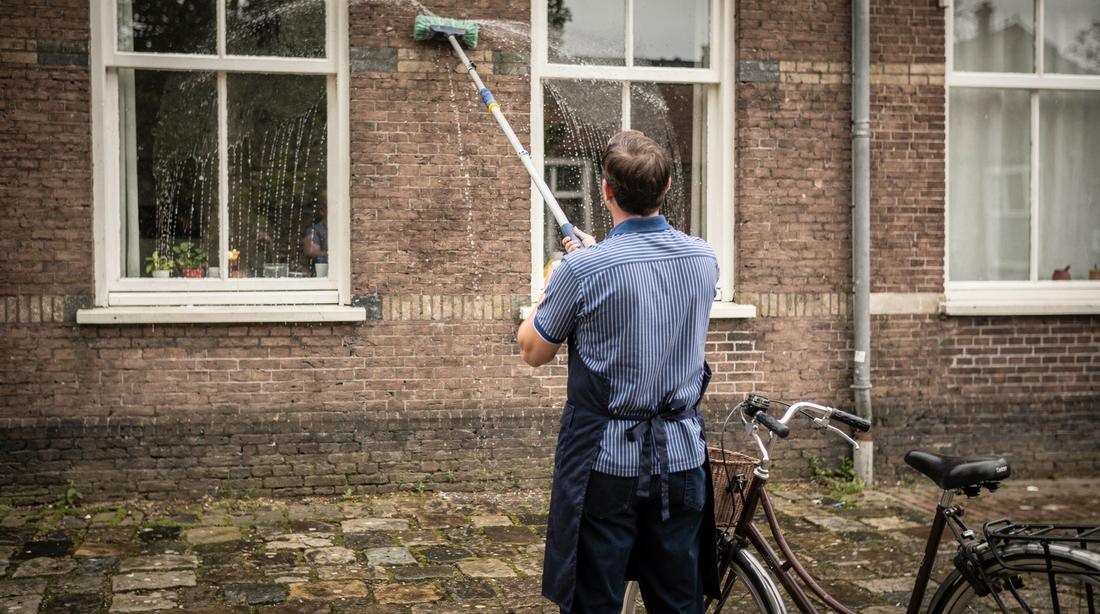
The short answer
- Streaks are usually a dirty squeegee blade or direct sunlight — not the wrong product.
- Frames, sills and rebates first, glass last. The reverse order undoes itself.
- Limburg water is hard, so it leaves mineral spots as it dries. Purified water does not.
- Outside glass: twice a year for most homes. Inside: every two to three months.
- Ground floor is a fair DIY job. Anything needing a ladder is not.
What’s in this guide
Almost nobody fails at cleaning windows because they used the wrong spray. They fail because of sequence, water and timing — three things no product can fix. Clean the glass before the frames and the grit runs back down it. Work in direct sun and the water dries before you can pull it off. Use Maastricht tap water and it leaves its minerals behind on the pane as it evaporates. Get those three right and streaks mostly stop being a problem, whoever is holding the squeegee.
Why your windows streak
There are only four real causes, and none of them is the brand of cleaner:
- A dirty blade. A squeegee picks up grit on the first pass. If you do not wipe the rubber between strokes, you are dragging that grit across the glass for every stroke after. This is the single most common cause.
- Direct sunlight. In sun the water evaporates before you can pull it off, so it dries in place and leaves whatever was dissolved in it behind. Work on an overcast day, or on the shaded side of the house.
- Too much detergent. Soap needs to be removed as well as applied. A faint slick of surfactant left behind dries into a haze that shows only when the light is low — which is exactly when you notice it.
- Cleaning the glass before the frame. See the next section: this one is pure sequence.
★ The one habit that fixes most of it
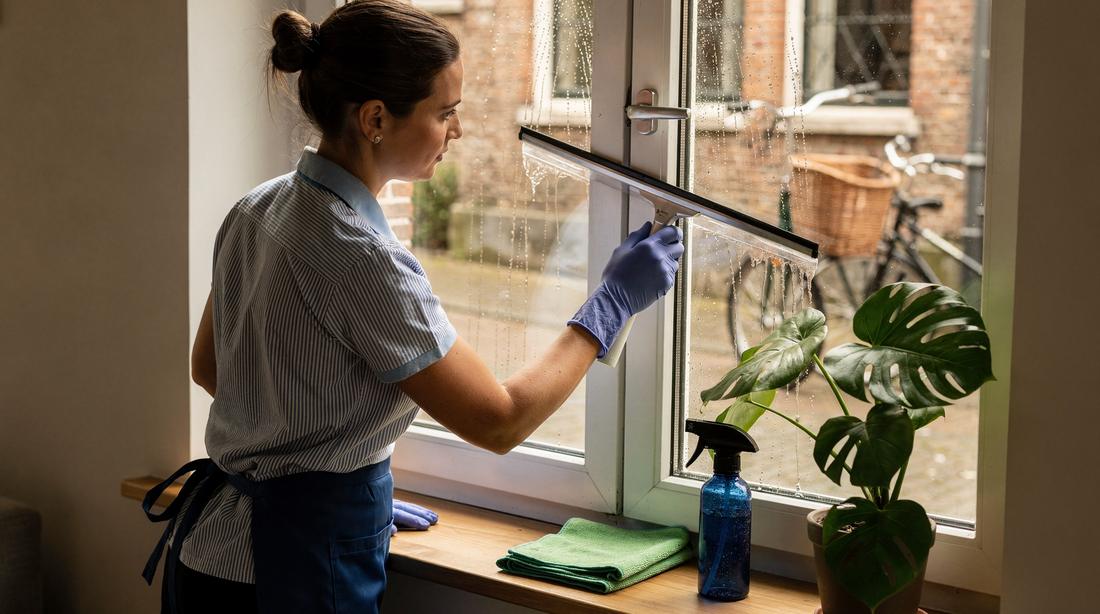
Wipe the squeegee blade on a dry cloth after every single stroke. It feels excessive and it is the difference between clear glass and faint lines. A blade with a nick in it should be replaced, not persevered with — a damaged rubber leaves a track no technique can avoid.
The order that fixes it
Windows are one of the few jobs where doing the right steps in the wrong order actively wastes the work:
- Frames, sills and rebates. Brush out the grit, cobwebs and dead flies from the channel the window closes into, then wipe the sill and frame.
- Insect screens, if fitted — out, brushed, back.
- The glass itself, top to bottom, overlapping strokes.
- The edges, with a dry cloth around the perimeter where water gathers.
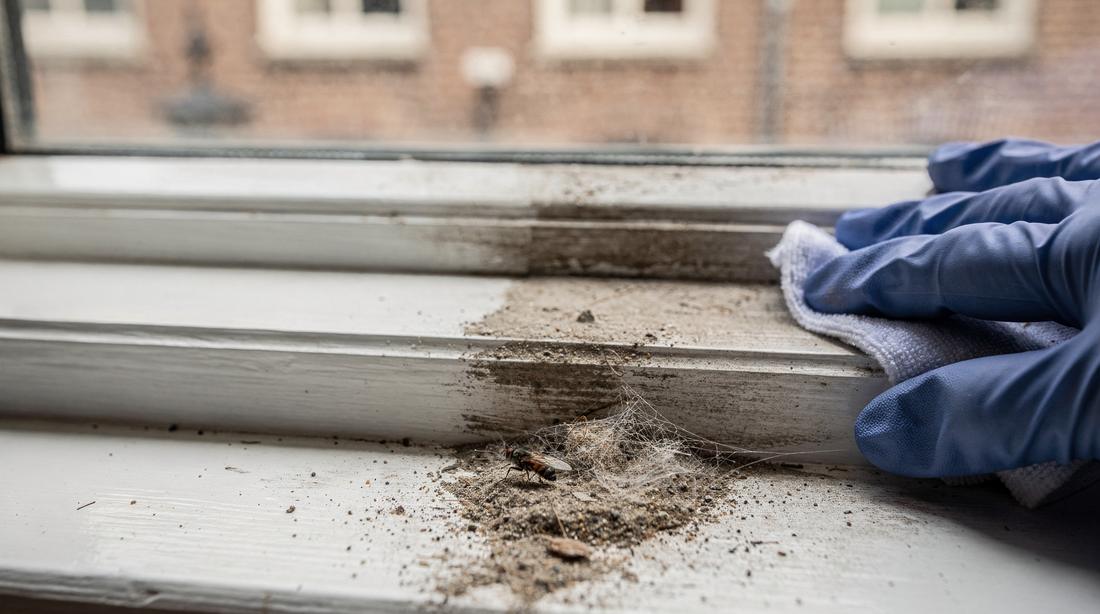
Do it the other way round and the first drip off the frame writes a line down the glass you just finished.
Hard water is a Limburg problem, not a technique problem
Water in this region is hard. That means it carries dissolved calcium and magnesium, and when a droplet evaporates on glass those minerals stay behind as a white spot. Rubbing harder does not remove them; it burnishes them.
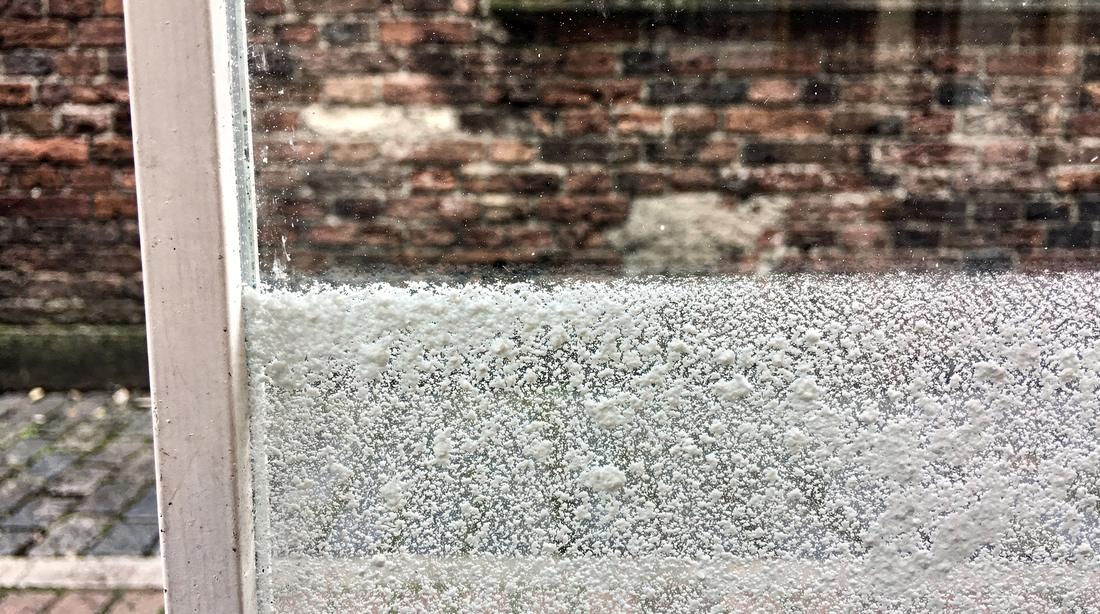
Two consequences worth knowing:
- Rinsing with tap water reintroduces the problem you just solved. Every drop you leave will spot.
- Long-standing spotting can etch the glass. Left for years — especially where a sprinkler or a leaking gutter hits the same pane — mineral deposits bond to the surface and need a dedicated acidic treatment, or the mark becomes permanent.
ℹ Why professionals use purified water
A water-fed pole runs mains water through a filter that strips out the dissolved minerals. Because there is nothing in it, there is nothing to leave behind — the glass can be left wet and it dries clear with no squeegee at all. That is the actual reason the professional result looks different, and it is not something you can reproduce with a bucket.
How often windows really need cleaning
| Situation | Outside glass | Why |
|---|---|---|
| Average home, quiet street | Twice a year | Rain and dust cycle |
| Busy road or city centre | Every 3 months | Traffic film and brake dust |
| Near trees or a park | Every 3 months | Pollen, sap, bird mess |
| Ground-floor shopfront | Weekly to monthly | Hands, spray, first impressions |
| Office or reception glass | Monthly | Fingerprints at door height |
| Interior glass, any home | Every 2–3 months | Cooking film and dust, not weather |
Inside and outside are genuinely different jobs on different clocks. Interior glass picks up a cooking-and-dust film that builds slowly and evenly; exterior glass is driven by weather and location. Doing both on the same schedule means one of them is always either early or overdue.
What to do yourself, and where to stop
Ground-floor glass you can reach standing on the floor, inside and out, is a perfectly reasonable job to do yourself with a decent squeegee, a bucket and the sequence above.
⚠ Where DIY should stop
Anything that needs a ladder, leaning out of an upstairs window, standing on a flat roof or reaching across an extension. Dutch townhouses are tall and narrow, which puts a lot of glass above safe reach. A fall costs more than a lifetime of window cleaning, and a professional working from the ground with a pole is both safer and faster.
What a professional actually brings
Not enthusiasm — equipment and insurance:
- Purified water, so drying leaves nothing behind (see above).
- Reach from the ground via a water-fed pole, which removes the ladder from the equation entirely on most Maastricht facades.
- Liability insurance, which matters the moment someone is working above a public pavement.
- Frames and sills included as standard rather than as an afterthought.
- Treatment for bonded mineral spotting, which ordinary cleaning cannot shift.
Details on the window washing page. If your glass has not been touched in a couple of years, expect the first visit to take longer than the ones after it — that is the same reset-then-maintain pattern as deep versus regular cleaning.
How window cleaning is priced
€ Paid estimate, then a fixed price
Window cleaning runs on the paid-estimate model, because the number of panes, the access and the state of the glass genuinely cannot be judged from a phone call. A precision photo estimate is €25, deducted in full from your invoice when you book (€38.70 express). You send photos, you get a fixed all-in price including VAT — usually within one business day. Order an estimate.
For everything else on the site, the price list has the current rates.
Frequently asked questions
Why do my windows streak even with a good cleaner?
Almost always the squeegee blade rather than the product. A blade picks up grit on the first pass and drags it across the glass on every pass after, unless you wipe it on a dry cloth between strokes. The other big cause is working in direct sunlight, where the water dries before you can pull it off and leaves whatever was dissolved in it behind.
Should I clean the frames or the glass first?
Frames, sills and the rebate the window closes into, then the glass. Do it the other way round and the first drip off the dirty frame writes a line down the pane you just finished. It is pure sequence, and it is the step people most often reverse.
Why does the water leave white spots on my windows?
Because water in Limburg is hard. It carries dissolved calcium and magnesium, and when a droplet evaporates on glass those minerals stay behind as a white spot. Rubbing harder burnishes them rather than removing them. Professionals use purified water — with nothing dissolved in it, there is nothing left behind when it dries.
How often should windows be cleaned?
Outside glass twice a year for an average home, every three months on a busy road or near trees, weekly to monthly for a shopfront. Interior glass is a separate clock — every two to three months, because it collects a cooking-and-dust film rather than weather.
Can permanent water stains be removed from glass?
Often, but not always. Recent hard-water spotting dissolves with the right acidic treatment. Deposits left for years — especially where a sprinkler or leaking gutter hits the same pane repeatedly — can bond to and etch the surface, at which point the mark is in the glass rather than on it and no cleaning will lift it.