

The short answer
- Airborne grease is the whole problem. It settles on everything, including above head height.
- Split the work: brigade nightly, contractor periodically. Blurring the line is why things get missed.
- Extraction filters and ductwork carry a real fire risk and are the most-deferred task.
- Mopping a greasy tile floor spreads a film — grout needs a machine, and grout is where slips start.
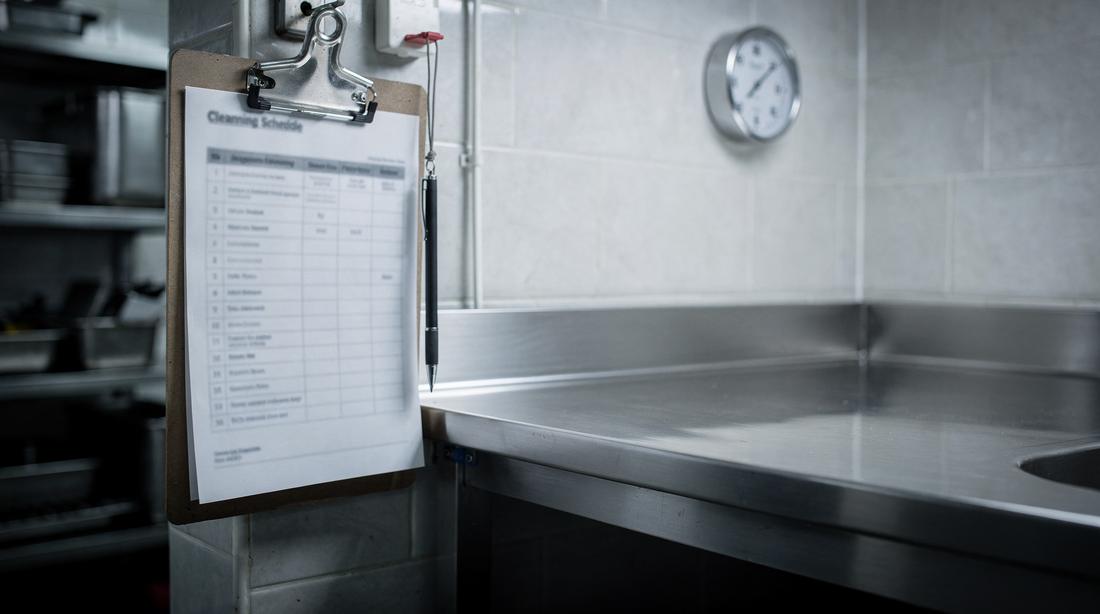
- A schedule with names against tasks survives a busy Saturday. Good intentions do not.
What’s in this guide
A commercial kitchen is not a hard place to clean. It is a hard place to keep clean, because the thing you are fighting is deposited continuously by the equipment you make money with. Airborne grease from every service settles on every surface in the room, including the ones above head height that nobody looks at. The kitchens that stay on top of it are not the ones with the most conscientious chefs — they are the ones with a written schedule that splits the work between the brigade and a contractor, and names who does what.
Grease is the whole problem
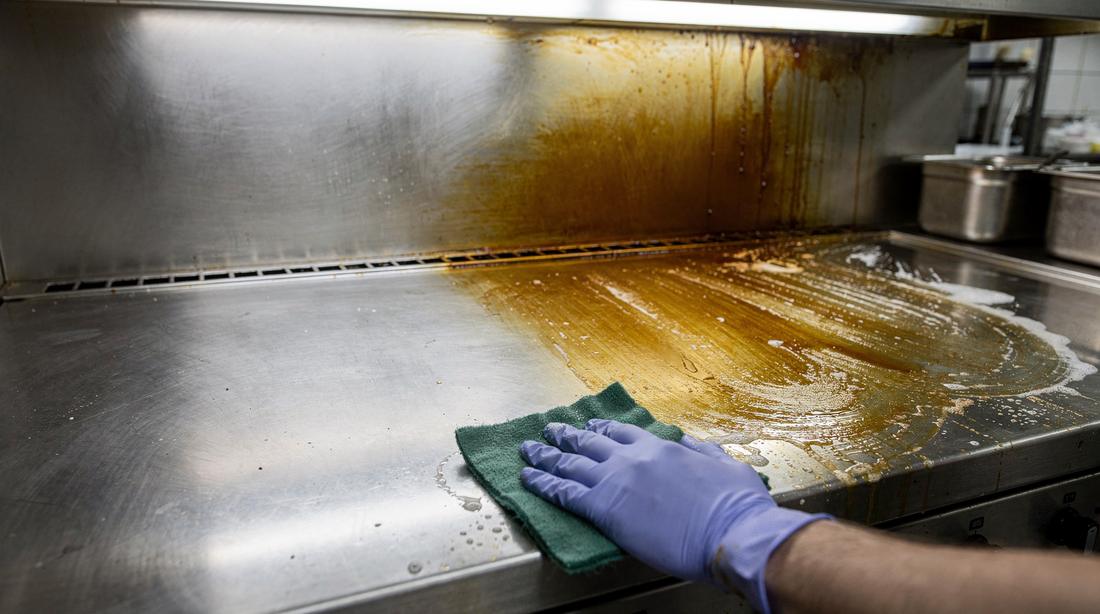
Every time something is fried, grilled or roasted, fat becomes airborne. It travels with the heat, hits cooler surfaces, and condenses there as a thin film. That film then does three things:
- It collects everything else. Dust and flour stick to it, which is why a neglected kitchen surface goes from shiny to tacky to visibly brown in stages.
- It hardens. Fresh grease wipes off. Grease that has been through a few heat cycles polymerises into a varnish that needs a caustic degreaser and dwell time.
- It accumulates where nobody looks. The tops of units, the underside of shelves, the canopy interior, the ductwork. Out of sight, and the part with a fire risk attached.
⚠ The fire point
Accumulated grease in an extraction canopy and its ductwork is combustible, sitting directly above open flame. This is the reason extraction cleaning is scheduled rather than optional, and why insurers ask about it. Check what your own policy and your HACCP plan require — those documents, not this article, set your obligations.
Brigade versus contractor
Most kitchen cleaning failures come from an unclear line between the two. Draw it explicitly:
| Kitchen brigade, nightly | Contractor, periodically |
|---|---|
| Surfaces, benches, prep areas | Canopy interior and filters |
| Range top, salamander, fryer surrounds | Ductwork and extraction fan |
| Small equipment, boards, containers | Deep clean of ovens and combi |
| Floors mopped, drains flushed | Floor machine-scrub, grout |
| Bins out, sanitising | Behind and under fixed equipment |
| Fridges wiped, temperatures logged | Walk-in deep clean, seals, shelving |
| Hand-contact points | High-level surfaces, wall panels, ceiling |
The right-hand column is what needs equipment, chemicals or time the brigade does not have after service. The left-hand column is what has to happen every single night regardless of how busy it was.
The nightly close-down
- Cooking equipment shut down, cooled, surfaces degreased while still slightly warm — grease releases far more easily then.
- Fryer filtered or drained per your own schedule.
- All benches cleared, cleaned and sanitised, with contact time actually respected rather than wiped straight off.
- Boards and small equipment washed and racked to air-dry.
- Fridge and prep-fridge handles, door seals and hand-contact points sanitised.
- Bins emptied, washed, relined.
- Floor swept, then mopped with a degreaser, drains flushed.
- Sinks and taps descaled — hard water in Limburg means this is a nightly habit, not a periodic task.
The periodic list
| Task | Typical frequency |
|---|---|
| Canopy filters | Weekly to monthly, by volume |
| Canopy interior and plenum | Quarterly |
| Ductwork and extraction fan | Per your insurer and cooking volume |
| Behind and under fixed equipment | Monthly |
| Floor machine-scrub, grout | Monthly |
| Walk-in fridge and freezer deep clean | Monthly |
| Wall panels and high-level surfaces | Monthly to quarterly |
| Oven and combi deep clean | Monthly |
| Drain lines and grease trap | Per your maintenance schedule |
Extraction is the one not to defer
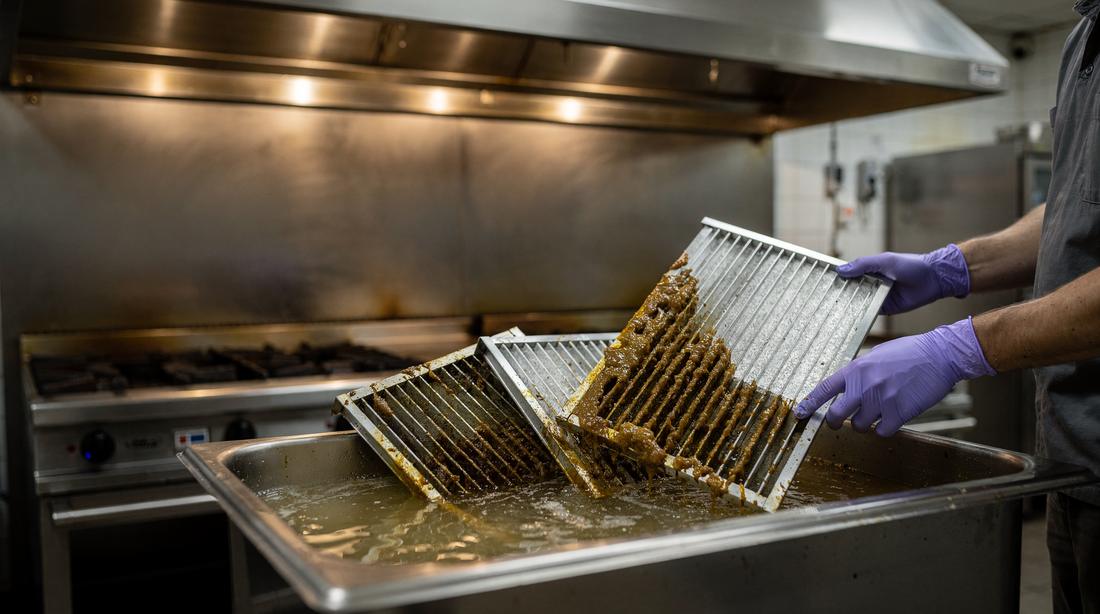
Filters are straightforward — they lift out and soak, and a kitchen doing real volume needs that weekly. The canopy interior, the plenum behind the filters and the ductwork above are the parts that get deferred, because they are invisible and awkward.
They are also where accumulated grease sits directly in the path of extracted heat. Whatever your insurer and HACCP plan specify is the schedule to work to; the practical point is that this is not a task to skip because the kitchen looks clean at bench height.
Floors, grout and slips
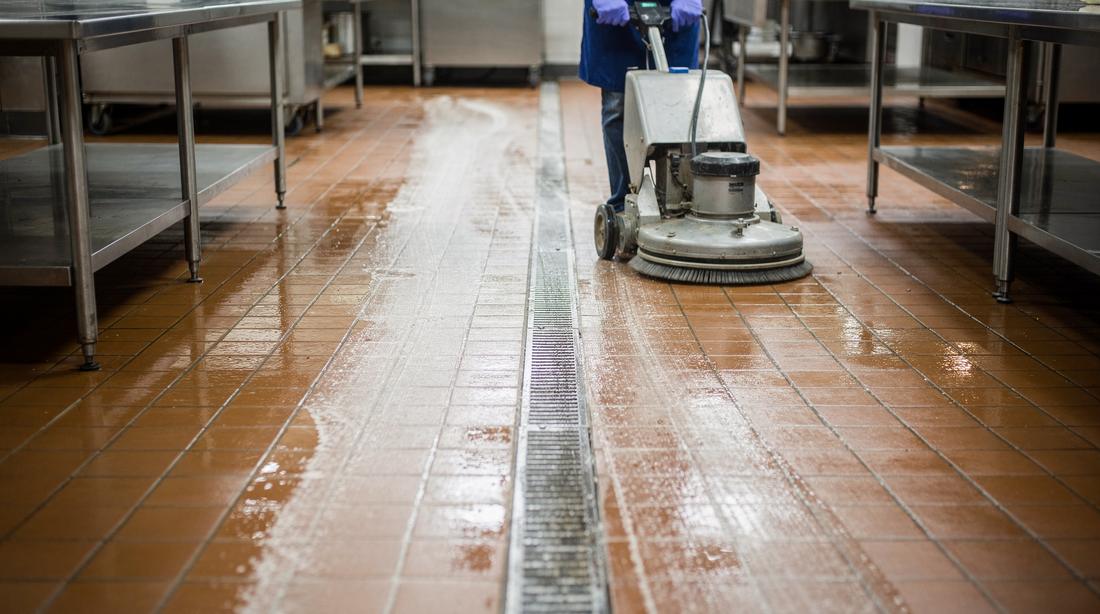
A commercial kitchen floor is usually quarry tile with deep grout lines, and grease behaves badly on it. Mopping a greasy floor with an exhausted mop does not remove the film — it spreads it thinner and more evenly, which makes the floor look better and be more slippery.
- Sweep first. Wet debris is much harder to lift.
- Use a degreaser, not a general-purpose cleaner, and give it dwell time.
- Change the water. A mop bucket saturated with grease is redistributing it.
- Machine-scrub monthly. Only mechanical agitation gets into the grout, and grout is where the residue that causes slips accumulates.
- Flush the drains and clean the channel covers, which is where smell starts.
Front of house
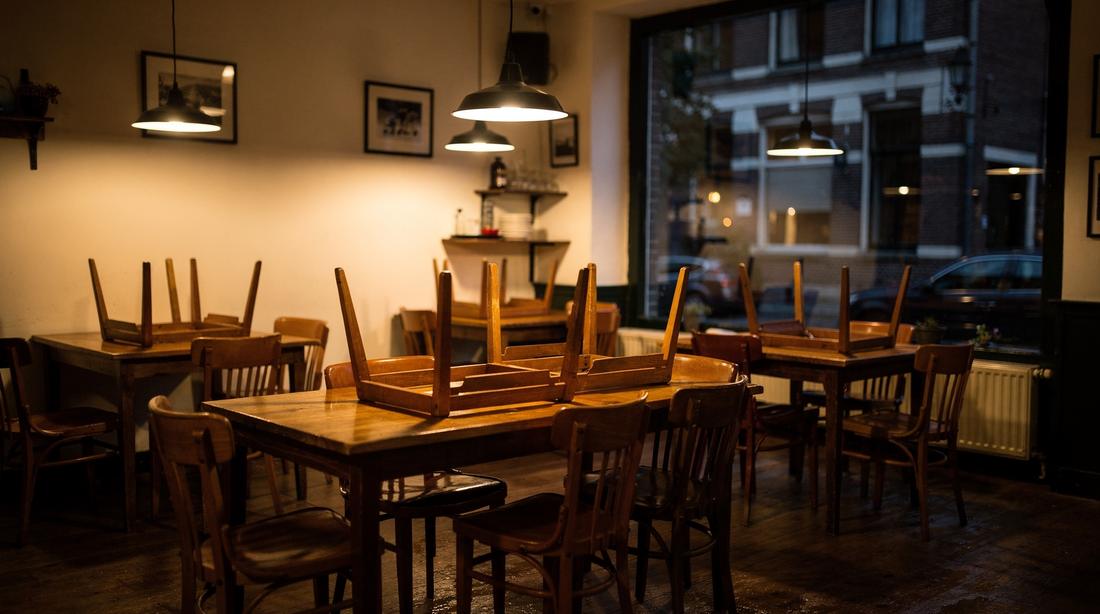
Guests judge a dining room on two things: how it smells, and what they touch. Neither is what an operator notices after eight hours inside the building.
- Smell comes from drains, bins, and upholstery that has absorbed a year of kitchen air. Soft furnishings need periodic extraction, which is the most commonly skipped item in a restaurant.
- Touch points: menus, chair backs, table edges, door handles, card terminals, the handrail on the stairs to the toilets.
- The customer toilets, which more guests will judge you on than the food.
- Glass and the entrance, at hand height, where every fingerprint shows.
How it is quoted
€ Per site, because access decides it
Restaurant work is quoted per site rather than from a rate card. Whether we come in after close or before opening, whether the kitchen is gas or induction, extraction volume, and how the periodic and nightly work is split all move the figure far more than floor area. Tell us the site and the hours and you get a fixed all-in price including VAT. See restaurant cleaning or request a quote.
Every visit is confirmed on site with an NFC check-in and every finished area is photographed and reviewed before it is called done — which for an operator means the close-down is documented rather than assumed. There is more on how that works on how we work.
Frequently asked questions
How often should commercial kitchen extraction be cleaned?
Filters weekly to monthly depending on cooking volume; the canopy interior and plenum quarterly; ductwork and the extraction fan on the schedule your insurer and HACCP plan specify. This is the task most often deferred because it is invisible, and it is also the one where accumulated grease sits directly in the path of extracted heat above open flame.
What should the kitchen team clean versus a cleaning contractor?
The brigade handles nightly close-down: surfaces, range top, small equipment, floors mopped, drains flushed, bins, fridges and hand-contact points. A contractor handles what needs equipment, chemicals or time nobody has after service: canopy interior and filters, ductwork, behind and under fixed equipment, machine-scrubbing floors and grout, walk-in deep cleans and high-level surfaces.
Why is my kitchen floor still slippery after mopping?
Because mopping a greasy quarry-tile floor with an exhausted mop does not remove the film, it spreads it thinner and more evenly — so the floor looks better and is more slippery. You need a degreaser with dwell time, fresh water rather than a saturated bucket, and a monthly machine-scrub, since only mechanical agitation reaches the grout where the residue accumulates.
Why does grease get harder to remove over time?
Because it polymerises. Fresh airborne grease wipes off easily, but grease that has been through repeated heat cycles turns into a varnish-like layer that needs a caustic degreaser and real dwell time. It also collects dust and flour as it sits, which is why a neglected surface goes from shiny to tacky to visibly brown in stages.
What makes a restaurant smell, and how do you fix it?
Usually drains, bins, and soft furnishings that have absorbed months of kitchen air. Drains and bins are a nightly task; upholstery and any carpet need periodic hot-water extraction, which is the most commonly skipped item in a restaurant and the one guests notice first without being able to name it.