


The short answer
- Ask who exactly holds the key — a named person, or a pool of whoever is free?
- Ask where it lives between visits, and what happens to it the day you cancel.
- A key with your address on it is the only genuinely dangerous mistake in this list.
- Ask what proof you get that somebody actually came, and when.
- You are allowed to start with a visit where you are home. Any decent company expects that.
What’s in this guide
Cleaning is the only service most people buy that involves handing a stranger the means to enter their home while they are at work. We are aware of how strange that is, and we would rather you asked us hard questions than quietly worried about it for a year. This piece is written to be used on any cleaning company, including this one. If the answers make somebody uncomfortable, that is the answer.
The thirty-second decision
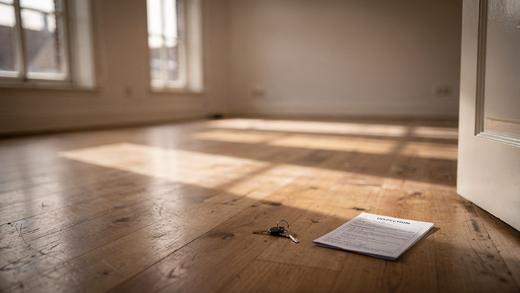
It nearly always happens in a doorway. You are on your way out, the arrangement is agreed, and a key changes hands with a sentence like "so you can get in on Thursdays". Thirty seconds, and the single largest act of trust in this trade is done.
None of what follows is about suspicion. It is about the fact that a decision this size deserves more than half a minute, and that the questions are short.
A company that has thought about your key will answer these in one breath. A company that has not will improvise — and you will hear it.
Seven questions worth asking
- Who will hold it? One named person, a small named team, or whoever happens to be free that week? There is no single right answer — but "we send whoever is available" and "the same two people" are very different arrangements, and you should know which you are buying.
- Where does it live between visits? A locked place at the company, or in somebody’s coat pocket for a year?
- Is it labelled? The correct answer is a code that means nothing to anyone outside the company. See below — this is the one that matters.
- What happens the day I stop? How is it returned, how fast, and do you get that in writing?
- Who is liable if something goes wrong? Ask whether the company is insured and registered — in the Netherlands that means a KvK number you can look up, and a policy that covers work in your home.
- What happens if the cleaner is ill? This is the question that reveals the shape of the company. If the answer is "then nobody comes", fine — but you want to know before the week it happens.
- How do I know somebody came, and when? See the last section. This one used to be unanswerable and no longer is.
Why a key should never carry your address
Every other item on the list is about diligence. This one is about consequence.
A key on its own is close to useless. A key with an address on it is a door. That is the entire risk in this arrangement — not that a company is dishonest, but that a keyring gets left on a café table with a note attached explaining exactly which door it opens.
So the answer you want is that keys carry a code, and that the code means nothing except inside the company’s own records. Ask to see the tag. It takes two seconds and it tells you more about a company’s habits than any brochure.
The same logic applies to the pictures of your home that exist on someone’s phone, and to any code you give for a key safe: change the code when the arrangement changes, exactly as you would after a move.
If you would rather not hand over a key at all
You do not have to. Perfectly normal arrangements:
- Be home the first few times. Nobody sensible will object, and it is the fastest way to learn whether the fit is right — you will know within one visit whether the people in your home are the kind you want there.
- A key safe with a code you control and can change yourself.
- A neighbour or concierge who lets the team in.
- Fixed times you are in — early mornings and late afternoons work for more households than people expect.
The trade-off is flexibility: a team that can only come when you are home is a team that can only come at one time. That is a fair price for peace of mind, and it is your call, not ours.
What happens to a key here, step by step
We are asking you to judge companies on this, so here is ours written down, and you are welcome to hold us to it.
- A key is logged against the address in our system, not against a person’s memory.
- It is tagged with a code. No address, no name, no street — a code that means something only inside our own records.
- It is signed out for the visit and signed back in afterwards, so at any hour there is an answer to "where is it".
- On the day you stop, it comes back, and we confirm the return in writing. You should not have to chase a key.
None of this is clever. It is the sort of thing that only matters on the one day it matters — and on that day it is the entire difference between an inconvenience and a locksmith.
Proof that somebody actually came
The old version of this arrangement asked you to take it on faith. You came home, the place looked fine, and that was the whole report. If something had been missed you found out days later; if nobody had come at all you sometimes never found out.
That is solvable now, and it is the part we would push any cleaning company on. Ours works like this: every visit is confirmed on site with an NFC check-in — a tag on the wall that the phone has to physically touch, so a visit cannot be logged from a car park — and every finished area is photographed and reviewed before the job is called done. You can read the mechanics on how we work.
The point is not the technology. It is that "did someone come, and what did they do" should be a question with an answer, rather than something you decide how to feel about. Whoever you hire, ask what their answer is.
Frequently asked questions
Should I be home for the first clean?
If it would make you more comfortable, yes, and any decent company expects some customers to want that. It also helps practically: the first visit is when you point out the things only you know about the house.
What if my key is lost?
Ask before it happens. You want to know whether the company is insured for it, who pays for a lock change, and how quickly they will tell you. A company that has an answer ready has thought about it.
Is a key safe a good idea?
It is a reasonable middle ground, with one rule: the code is yours, you change it whenever the arrangement changes, and it is not the same code as anything else you use.
Can I ask for the same cleaner every time?
You can ask, and most companies will try. Be aware of what you are buying: consistency is easier to promise than to guarantee through illness and holidays, so ask what happens in those weeks too.
How do I check a company is real?
In the Netherlands, ask for the KvK number and look it up. Ask whether they are insured for work in your home. Both are ordinary questions and neither should cause hesitation — ours is KvK 86396862.