


The short answer
- Two piles: ordinary wear (not yours to pay for) and damage or neglect (yours).
- Cleaning is the odd one out — it is not wear, and it is the easiest thing to be charged for.
- The general position is that a home is handed back in the state it was handed over, minus normal living.
- Photographs at both ends beat every argument about what was there before.
- If you disagree, the Huurcommissie exists for exactly this, and it does not need a lawyer.
What’s in this guide
Almost every deposit dispute is the same dispute. The tenant thinks they left the place in a reasonable state; the landlord thinks they left it in a state that costs money. Both can be sincere, because they are using two different words for the same marks on the wall. The useful thing to understand is not the law in detail — you can read that for yourself, and we will point you at the people whose job it is — but the SHAPE of it, which is simple and which almost nobody is told: everything you leave behind lands in one of two piles, and only one of those piles can be charged to you.
Everything you leave behind lands in one of two piles
Strip away the vocabulary and the general position in the Netherlands is straightforward. A rented home is handed back roughly as it was handed over, with an allowance for the fact that somebody lived in it. What that allowance covers is called ordinary wear, and it is not yours to pay for. What falls outside it is damage or neglect, and that is.
Almost every deposit argument is a disagreement about which pile a particular thing belongs in. Once you can sort things yourself — before you hand back the keys — the conversation gets short.
The question is never "does this look bad?" It is "is this what three years of living here does, or is this what one accident did?"
This is the general picture, not legal advice, and every tenancy agreement can say something of its own. What follows is how it plays out in practice, in the flats we actually clean.
What counts as living somewhere
These are the things that happen to a home whether you are careful or not. Time and use do them, not you.
- Paint dulling and yellowing, especially above radiators and around light switches.
- Carpet flattened in the walking lines — hall, doorways, in front of the sofa.
- Small nail holes from pictures, where the agreement allowed pictures at all.
- Hairline cracks where walls meet ceilings, which are the building moving, not you.
- Taps and shower screens gone dull in a hard-water city — Maastricht is one.
- Worn seals around the bath and shower that have simply reached the end of their life.
You can expect to argue about the line between "flattened" and "ruined", and between "a few nail holes" and "a wall that needs re-plastering". That line is a matter of degree, and degree is what photographs settle.
What counts as damage
These are events. Something happened, on a particular day, and the home did not do it to itself.
- Burns, scorch marks and heat rings on worktops, sills and floors.
- Stains that went in and stayed — wine, oil, ink, pet accidents left to dry.
- Holes bigger than a picture hook, shelf brackets, anchors left in the plaster.
- Broken things: a cracked glass shelf, a snapped handle, a blind that no longer winds.
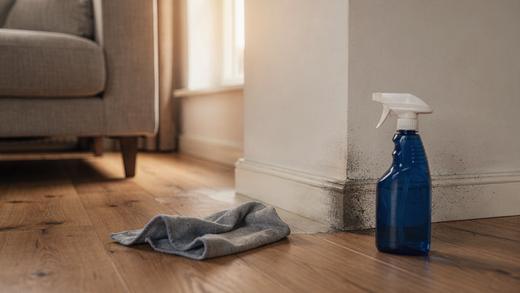
- Mould left to spread because a room was never ventilated or a leak was never reported.
- Anything you added and did not remove — including the adhesive marks left behind.
The last two are the ones that catch people. Mould from a leak nobody told the landlord about tends to be treated differently from mould that appeared the week before you left; and a reported problem is a landlord's problem, while an unreported one starts looking like neglect.
Where cleaning actually sits, and why it is the easy charge
Here is the part that costs tenants money, quietly, every month of the year.
Dirt is not wear. Nobody can argue that a grease-coated extractor filter is what time does to a kitchen — it is what cooking does, and cooking was yours. So an end-of-tenancy cleaning charge is the cleanest deduction a landlord can make: it is easy to evidence, easy to price, and very hard to dispute after the fact.
It is also the cheapest to avoid, which is the whole point of saying it out loud. The work is unglamorous and entirely predictable — the same rooms, in the same order, every time. Our end-of-tenancy checklist is the full version; the short one is: inside the oven, inside the fridge, the extractor filter, limescale on glass and taps, inside every cupboard, the windows and their frames, and the floors last.
If your agreement uses the word bezemschoon, read what that word actually obliges you to do before you decide it means "sweep up and go".
Ten photographs that end the argument
This is the single most useful habit in renting, and it takes eleven minutes. Photograph the same ten things on the day you move IN and the day you move OUT, in daylight, with something in frame for scale.
- The oven, door open, racks in.
- Inside the fridge and freezer, empty.
- The extractor filter, out of the hood.
- Every worktop, end to end.
- The shower screen, tiles and taps.
- The toilet, from above.
- Each floor, corner to corner.
- Every wall that has ever had something on it.
- Window glass, frames and sills.
- The meter readings.
Keep them somewhere with a date on them. A photograph taken on the day you arrived is not an opinion about whether the oven was clean — it is the oven, on that day. That is why the argument stops.
Ask for the handover in writing
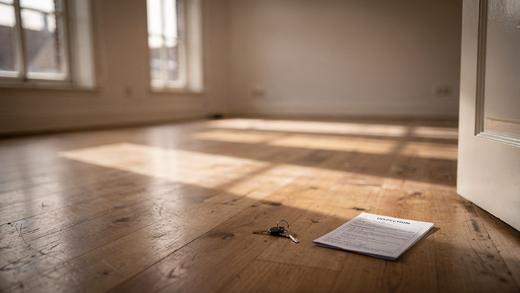
If there is an inspection, ask for the report and ask for it before money is deducted. A deduction that arrives as a number with no list attached is a deduction nobody can check, and you are allowed to want the list. Most landlords will produce one without any fuss; the ones who will not have told you something useful.
If you would rather not have the conversation at all, a documented professional clean is the usual way out: it is a receipt with a date and a scope on it, which is a far stronger thing to hold than a memory of a Sunday afternoon with a sponge. Our move-in and move-out cleaning exists for this exact week, and every finished room is photographed before we call it done.
If you disagree, you are not stuck
People assume a deposit dispute means a lawyer, and it does not. In the Netherlands the Huurcommissie handles disagreements between tenants and landlords, and it is designed to be used by people without legal training. For broader questions — or to have someone read your agreement with you — het Juridisch Loket gives free legal information.
Two things help far more than eloquence: the photographs, and a calm written request for the itemised list. Bring those and you have already done most of what anybody can do for you.
Frequently asked questions
Can a landlord charge me for cleaning if the contract says nothing about it?
The general position is that a home comes back in a reasonable state, and dirt is not treated as ordinary wear — so a cleaning charge does not depend on a clause existing. What a clause changes is the standard you agreed to. If you want certainty about your own agreement, the Huurcommissie or het Juridisch Loket will read it with you.
Is a professional clean actually required?
Usually not in those words. What is generally expected is the result, not the receipt. The reason people pay for one anyway is that a dated invoice with a scope on it is much easier to show than an argument about how hard you scrubbed.
What about the walls — do I have to repaint?
It depends entirely on what you did and what you agreed. Colour changes you made are usually yours to undo; ordinary dulling usually is not. Nail holes sit on the line and are decided by number and size, which is why the before photograph matters so much.
How long can a landlord keep my deposit before returning it?
There are rules about this, and we are deliberately not quoting a number at you — the honest answer is that it depends on your agreement and the circumstances, and the Huurcommissie states the current position far better than a cleaning company can.
We never did an inspection when I moved in. Am I in trouble?
You are in a weaker position, not a hopeless one. Photograph everything now, keep any messages where a problem was reported, and ask for the itemised list of any deduction. Anything dated is worth more than anything remembered.