

The short answer
- Surplus product does not rinse away — it dries as a sticky film that attracts dirt.
- Bleach disinfects; it does not clean, and it does nothing to grease.
- Vinegar is acid, and acid etches stone permanently.
- Never mix bleach with anything, particularly not an acid. This one matters.
- A smell is not evidence of clean. Fragrance is added on purpose, to sell.
What’s in this guide
Cleaning advice is passed down rather than tested, which is why so much of it is half right — and half right is the most durable form of wrong. Every myth below survives because it contains a genuine observation; it just gets applied to situations it was never true for. Each one gets its fair hearing here before it is taken apart, because knowing why a rule felt right is what stops you falling for the next version of it. One is also genuinely dangerous, and it is not the one most people would guess.
Myth 1: more product means a better result
What is true in it: concentration does matter. A cleaner too dilute genuinely will not shift grease, and there is a real threshold below which you are washing with expensive water.
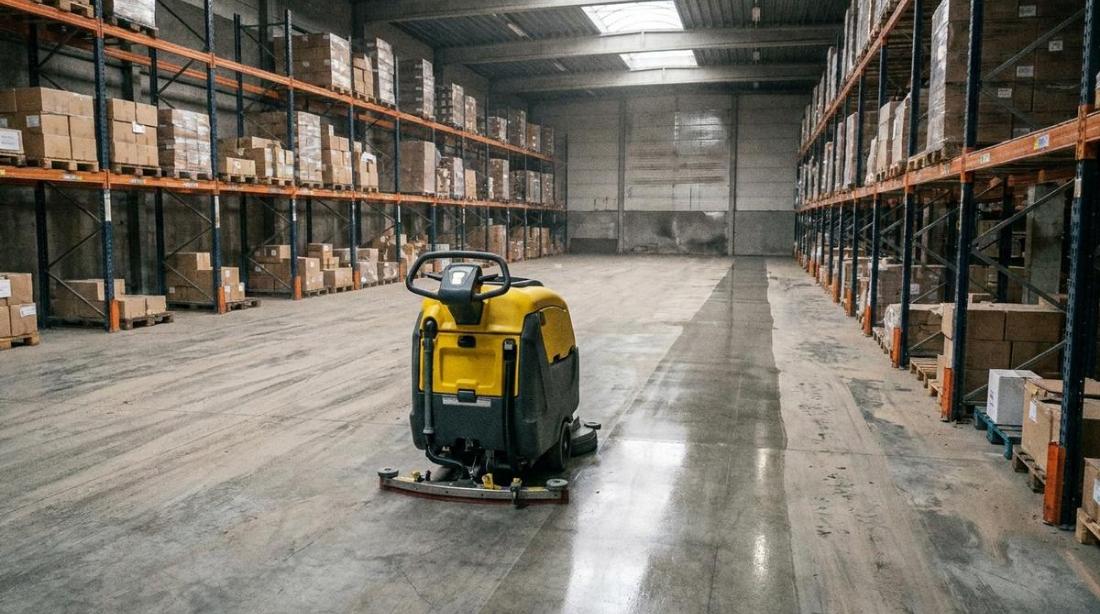
Where it goes wrong: above the correct dilution, the extra does not do more work — it fails to rinse away. It dries in place as a film, that film is slightly tacky, and tacky holds the next day's dust. This is the actual cause of the most common complaint in domestic cleaning: floors that feel sticky underfoot and look duller every week, prompting more product and a faster cycle.
What to do: measure rather than pour. If a floor is already sticky, wash it once with clean warm water and nothing in it, and again if the water comes back cloudy. Most "worn" floors turn out to be coated, and the coat comes off with plain water.
Myth 2: bleach cleans everything
What is true in it: bleach is an excellent disinfectant, and it is very good at removing colour from stains, which looks exactly like cleaning.
Where it goes wrong: disinfecting and cleaning are two different operations, and bleach only does one. It has essentially no effect on grease or on physical soil, and pouring it onto a dirty surface partly deactivates it against the dirt it meets. That is why bleach on a greasy kitchen surface produces a surface that smells of bleach and is still greasy.
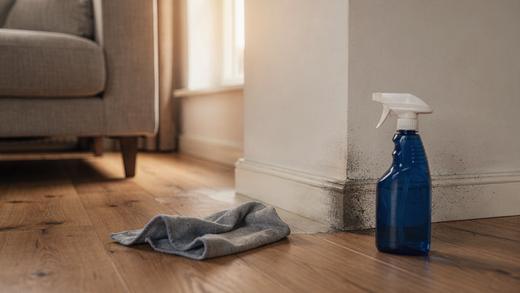
Worse, "removing the colour from a stain" is not removing the stain. Black mould bleached white is still there — the growth remains in the grout or the sealant, it simply stopped being visible, and it returns in a fortnight looking like a new problem.
What to do: clean first with a detergent, rinse, then disinfect if the surface warrants it. And in a bathroom, ask why the mould is there at all — a bathroom fan with a clogged grille keeps the room humid for hours, and until the humidity is fixed you are on a permanent bleaching schedule.
The one rule with no exceptions: never mix bleach with anything else, and never with an acid such as vinegar or limescale remover. That combination releases a toxic gas in an enclosed room. This is not caution — it is the reason people end up in hospital after cleaning a bathroom.
Myth 3: vinegar is safe on everything
What is true in it: vinegar is a weak acid, and acid dissolves limescale. On a glass shower screen, a kettle, or a tap in a hard-water area it genuinely works, it is cheap, and it is mild enough to use without gloves.
Where it goes wrong: the word "natural" has come to imply "harmless to surfaces", and acid is not harmless to surfaces. On natural stone — marble, limestone, travertine, and many composite worktops — acid reacts with the stone itself and leaves a dull etched patch that no cleaning will restore. It also degrades rubber seals over time, which matters in a washing machine or dishwasher, and it will damage the finish on sealed wood.
What to do: use it for limescale on glass, ceramic and chrome, and keep it away from stone, wood and rubber. On stone, use a cleaner made for stone; the surface is the expensive part and the cleaner is not.
Myth 4: everything should be antibacterial
What is true in it: there are surfaces where disinfection genuinely matters — chopping boards after raw meat, a toilet, a kitchen surface during food preparation, and anywhere in a home where someone is ill.
Where it goes wrong: antibacterial spray on a general surface is mostly doing nothing useful, and it is frequently doing it wrong. Disinfectants need contact time — a stated period wet on the surface — and the normal household method of spray-then-immediately-wipe removes it long before that. You have applied a product, not disinfected anything.
There is also a cost: many of these products leave residue, which is the sticky film from myth one arriving by another route. A damp microfibre cloth on an ordinary surface removes more actual dirt than a quick spray and wipe does.
What to do: detergent and a cloth for most surfaces, disinfectant where it is warranted, and when you use it, leave it wet for the time on the label before wiping.
Myth 5: hotter water is always better
What is true in it: heat helps. It softens grease, speeds up chemical reactions and makes most detergents work better, and a lukewarm bucket is a common reason a floor does not come clean.
Where it goes wrong: in two specific places, and both are expensive. Heat sets protein stains — blood, egg, milk, sweat — by cooking the protein into the fibre, which is why a hot wash can make a stain permanent that cold water would have lifted. And on sealed wood, heat plus moisture is the combination that opens seams.
There is a third, smaller one: very hot water evaporates fast, which is why cleaning a mirror or a shower screen in a steamy bathroom always streaks. The cloth cannot beat the evaporation.
What to do: hot for grease, cold first for protein, and cool and dry for glass.
Myth 6: clean has a smell
What is true in it: a bad smell is real information. If a room smells, something is wrong, and the smell is worth investigating.
Where it goes wrong: the inference runs backwards. Lemon, pine and "fresh linen" are added to products deliberately, as a purchase and reassurance cue, and they are entirely separable from whether anything was removed. A surface can be perfectly clean and smell of nothing, and a surface can smell strongly of lemon and be covered in a tacky film of lemon-scented residue.
The practical damage is that fragrance hides the signal. A drain that has dried out, a damp patch behind a cupboard, a bin that needs washing rather than emptying — each announces itself by smell, and masking it means the actual problem goes on for months.
What to do: treat a smell as a diagnostic, not a target. Find the source, remove it, and let the room smell of nothing. Neutral air is the correct result, and it is what a properly finished deep clean leaves behind — noticeably absent rather than noticeably scented.
Why these survive
Every myth here follows the same shape: a true observation, generalised one step too far, and then confirmed by a result that looked right. Bleach did make the mould disappear. The extra cleaner did produce more foam. The hot wash did get the plates clean. Nothing in daily experience contradicts any of them, because the failure is delayed — the mould comes back next month, the floor dulls over a season, the stain sets permanently and gets blamed on the fabric.
Which gives one reliable test for any cleaning advice, including everything above: does it explain the mechanism? "Bleach whitens but does not remove" tells you when it will fail. "Bleach cleans everything" tells you nothing, and will eventually be wrong in an expensive way.
Frequently asked questions
Is it ever safe to mix cleaning products?
Treat it as never. Bleach with an acid such as vinegar or limescale remover releases a toxic gas, and bleach with ammonia-based products does something similar. Use one product, rinse, then use another if you need to.
What single product is most useful in a home?
A neutral pH detergent and a few microfibre cloths handle the large majority of surfaces. Add a limescale remover for hard-water areas and a disinfectant for the kitchen and bathroom, and very little else earns its shelf space.
Does natural mean safe for surfaces?
No. Vinegar and lemon juice are acids and will etch stone; bicarbonate is a mild abrasive and will scratch a gloss finish. Natural describes the origin, not the effect on what you are cleaning.
My bathroom mould keeps coming back. What am I missing?
Almost always humidity rather than cleaning. Check that the extractor grille is not clogged, that it runs long enough after a shower, and that the room can dry. Until moisture leaves faster than it arrives, the mould has a reason to return.
Are professional products different from what I can buy?
Mostly in concentration and in being matched to a surface rather than sold as universal. The larger difference is method — correct dilution, contact time, and removing the water rather than letting it dry.